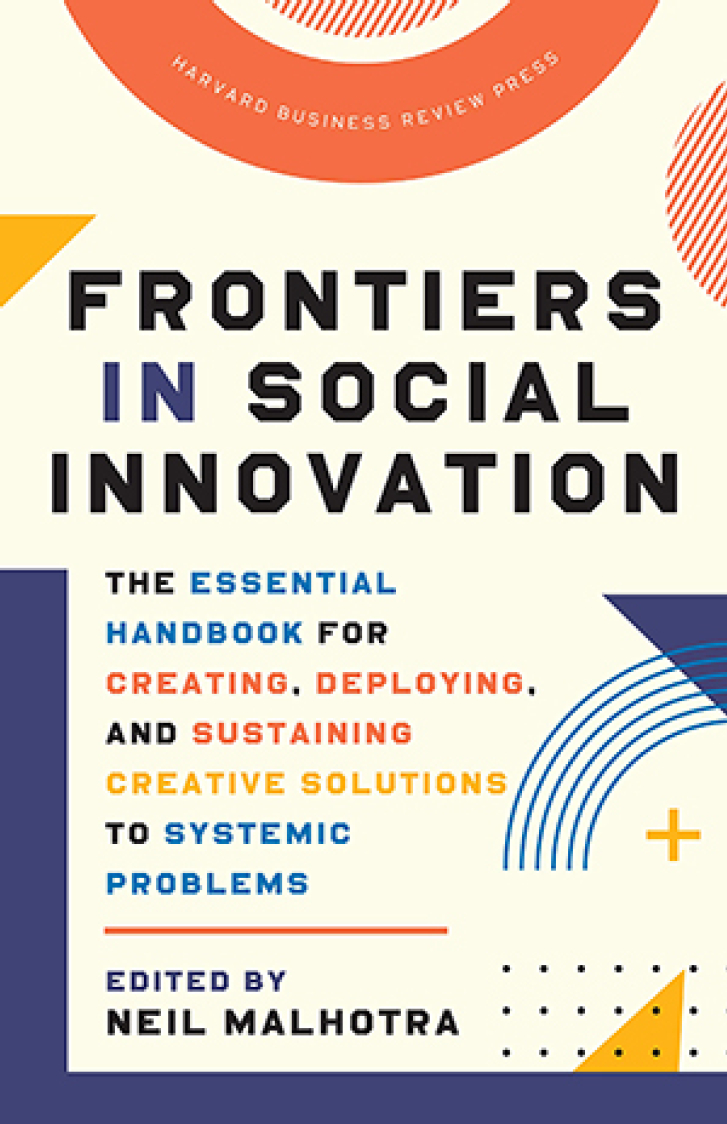
An excerpt from Frontiers in Social Innovation on making ESG metrics trustworthy

Governments have an opportunity to partner with impact investors and philanthropists to turn emergency spending into long-term impact.

Foundation officers and endowment managers too often prefer exceedingly safe grants and investments because of misapplied principles, biases, and concerns about their reputations. A Viewpoint from the Winter 2020 issue.

The book presents a thought-provoking framework for categorizing and implementing performance management strategies based on the causal relationship between an organization’s activities and outcomes and on its control over those outcomes. A book review from the Winter 2020 issue.
A growing number of investors are attempting to create social value with their investments, but it’s often more difficult to achieve than one might think.

A report on strategic investing at the Bill & Melinda Gates Foundation.

Strategic philanthropy is a much-maligned practice that continues to have a great degree of power for today’s philanthropists.
Impact investors need to acknowledge the importance of “investment impact” and develop effective tools for ascertaining it.
The effective altruism movement has the potential to create an aspirational anchor, which may change giving practices over time.

A longer version of "When Can Impact Investing Create Real Impact?" from the Fall 2013 Up for Debate feature.

It is possible for impact investors to achieve social impact along with market rate returns, but it's not easy to do.
Giving 2.0 Project U offers a treasure trove of resources for teachers and students of philanthropy.
One of 16 special essays on how the field of social innovation has evolved and what challenges remain ahead.

How The William and Flora Hewlett Foundation approaches high-risk philanthropic ventures.

The outgoing president of the William and Flora Hewlett Foundation reflects on the importance of strategic philanthropy.

Improving the lives of disadvantaged populations requires proven theories of change.

By estimating the social return on their investments, funders can deploy their dollars more effectively. To demonstrate the power of these calculations, the authors show how three organizations—the Robin Hood Foundation, Acumen Fund, and the William and Flora Hewlett Foundation—use cost-benefit analysis to evaluate their ongoing programs, choose mission investments, and plan long-term strategies.
Top foundation leaders reveal how they set payout rates, executive salaries, and trustee compensation.