


Civic Engagement
Lessons from an Organizer
CREATIVE COMMUNITY ORGANIZING: A Guide for Rabble-Rousers, Activists, and Quiet Lovers of Justice by Si Kahn
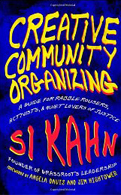
CREATIVE COMMUNITY ORGANIZING: A Guide for Rabble-Rousers, Activists, and Quiet Lovers of Justice by Si Kahn
A list of social innovators worth watching.

A report on a talk by Jeffrey Sachs, director of The Earth Institute, professor of Sustainable Development, and professor of Health Policy and Management at Columbia University.
A new report suggests that no matter how narrow a foundation’s (or by extension, a nonprofit’s) mission, it should creatively serve a broad base of beneficiaries and not exclude the poor or minorities.

With many in the community losing their savings in the Madoff scandal, Jewish philanthropies took a hard hit.
More diverse workplaces have higher revenues, more customers, larger market shares, and greater relative profits.

A pluralistic society boasts many independent centers of power and foundations have an instrumental role in supporting such diversity. Online giving marketplaces are further democratizing philanthropy by empowering donors to support the causes they care about. In this panel discussion, sponsored by the Stanford Center for Social Innovation, experts in the field consider whether such online spaces are simply useful adjuncts to the work of philanthropy—or whether they promise to revolutionize the sector altogether.
Just because we now have a president of color does not mean we should take the topic of diversity off our agenda.
How can the United States and the world benefit from the work of people who have been dedicated to social change over the last 30 years? What can those with the most diverse array of backgrounds and careers do to impact social, economic, and political policy, particularly in this unprecedented era of new political leadership? In this panel discussion from the 2008 Encore Careers Summit, activist leaders from the women's, civil rights, and environmental movements discuss how we can reinvent this country by drawing on lessons from the past.
"We’ve got to stop using the word 'minorities' to describe the communities we serve. It doesn’t have any value. It never has."