


Business
How Business Can Engage Men as Allies for Gender Equality
Businesses can help advance gender equality by shifting individual behavior, committing to inclusive organizations, and using their external influence to shape new social norms.

Businesses can help advance gender equality by shifting individual behavior, committing to inclusive organizations, and using their external influence to shape new social norms.

The social sector is drowning in evidence-based research but more often than not fails to use it effectively. Bridging the divide requires a more holistic approach to decision-making. A feature story from the Spring 2020 issue.

Evaluations have become critical to nonprofit performance, but they are prohibitively expensive for many organizations. Solving this problem will make the sector more equitable and successful. A Viewpoint from the Spring 2020 issue.

In a new paper, organizational management scholars Lisa Hehenberger, Johanna Mair, and Ashley Metz take a critical look at the burgeoning sector of impact investing by drawing on 12 years of data from Europe. A Research article from the Spring 2020 issue.
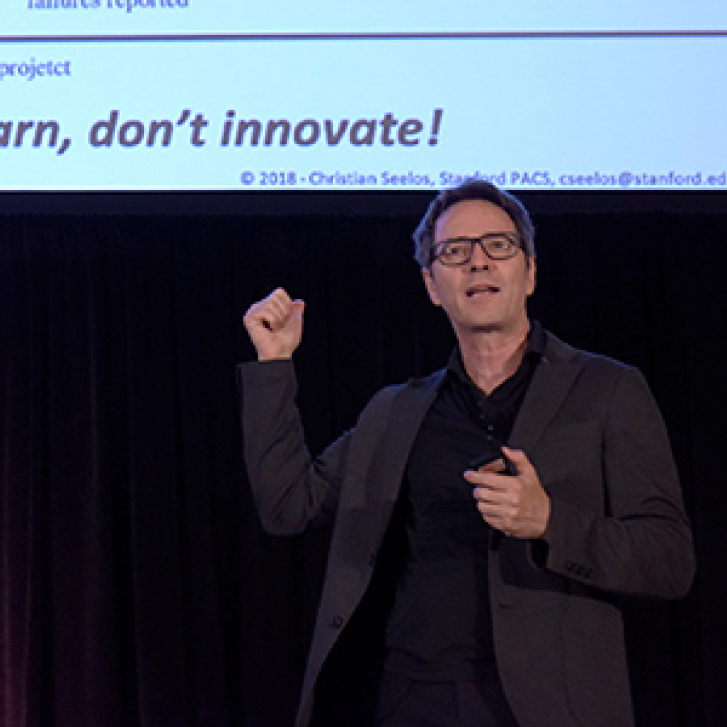
If an organization doesn't know how to learn or scale, innovation isn't the answer to its struggles.

Four strategies for creating a positive school culture that focuses on the whole student and fosters long-term, holistic well-being.

How organizations can create a culture that supports innovation, regardless of their size or complexity. The fourth of five articles in Humanitarian Innovation in Action, a series on innovation as a tool for change within complex institutions.

By expanding support to arts and cultural organizations in diverse neighborhoods, funders can provide a missing ingredient in the effort to advance equity.

A pragmatic, “good enough” approach to experimentation in humanitarian contexts. The third of five articles in Humanitarian Innovation in Action, a series on innovation as a tool for change within complex institutions.

By bringing diversity and inclusion to the forefront, even the most traditional organizations can enhance the design and implementation of social solutions. The second of five articles in Humanitarian Innovation in Action, a series on innovation as a tool for change within complex institutions.