Social Entrepreneurship
Who Are the Change Makers?
Driving Social Change: How to Solve the World’s Toughest Problems by Paul C. Light
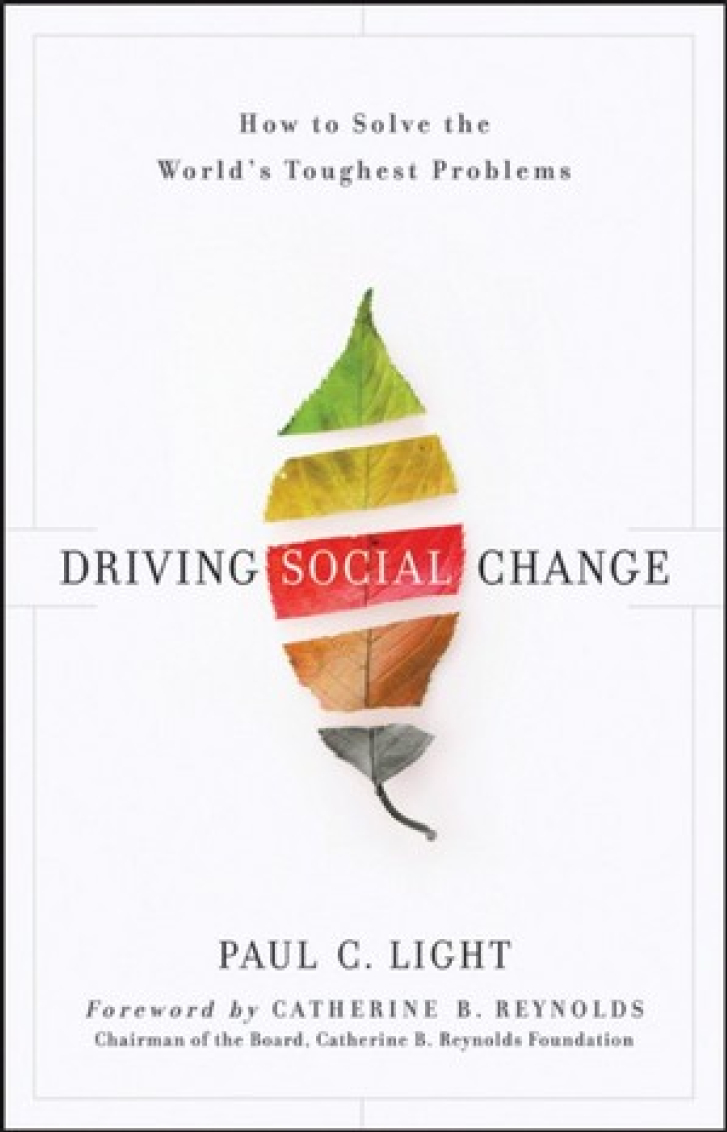
Driving Social Change: How to Solve the World’s Toughest Problems by Paul C. Light

Ending poverty is beyond the reach of any single sector or actor

Large-scale social change requires broad cross-sector coordination, not the isolated intervention of individual organizations.

Les Fusions et acquisitions se justifient-elles dans l'economie sociale ou sont elles le privilege de l'economie capitaliste?
While public-private partnerships have remained elusive to many, Cambodia, one of the least developed countries in the world, has been quietly using the strategy to provide universal HIV/AIDS treatment.

Manish Bapna, managing director of World Resources Institute, is helping China manage its environmental problems.

Disseminating innovations takes a distinct, sophisticated skill set, one that often requires customizing the program to new circumstances, not replicating.

Annually, more than a trillion dollars are spent on millions of American nonprofit and government institutions. And 15 nonprofits are started each day. But there is still not significant progress on social issues in the United States. In this audio lecture, sponsored by the Stanford Social Innovation Review, Andrew Wolk, CEO of Root Cause, argues that the time has come for a social impact market—one that fosters innovation and collaboration across the governmental, business, and nonprofit sectors to maximize scarce resources and spread solutions. Wolk believes this cross-sector approach presents our best chance to solve long-term educational, healthcare, environmental, and other problems.

CEO Joel Sadler about the company’s initial product,an artificial knee joint that is dramatically changing the lives of amputees in developing countries

How a private-public-academic partnership is helping people with serious mental illnesses find and keep jobs.