
Critical Competences for Social Impact Leaders
Five opportunities for educators to more clearly connect classic entrepreneurial skills to the social impact field and to foster skills that can serve a range of social impact leadership roles.
Five opportunities for educators to more clearly connect classic entrepreneurial skills to the social impact field and to foster skills that can serve a range of social impact leadership roles.

Technological innovations have the potential to transform education, but only if they encourage a more active learning environment that fosters critical thinking.

An Oxford project provides a place where migrants forced to flee their homes can publish their work.

In the San Francisco Bay Area and beyond, mental health professionals are using hip-hop culture to reach troubled youth.

It’s a ripple effect: HELP fulfills Haitian students’ dreams of college, and then they take up the baton.


Large-scale social change requires broad cross-sector coordination, not the isolated intervention of individual organizations.

American educators, policymakers, and philanthropists are overselling the role of the highly skilled individual teacher and undervaluing the benefits that come from teacher collaborations.
Both human-centered and systems-thinking methods fit within an effective design approach, and can work in conjunction to address social challenges.
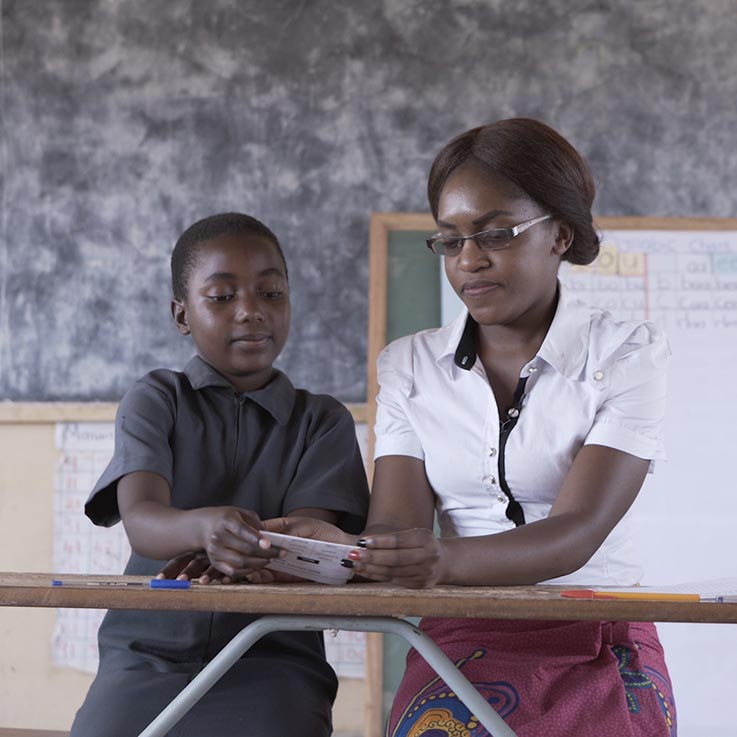
Research from the Abdul Latif Jameel Poverty Action Lab (J-PAL) and its partners shows how to help children learn amid erratic access to schools during a pandemic, and how those solutions may make progress toward the Sustainable Development Goal of ensuring a quality education for all by 2030.

How standardized testing, gentrification, school choice, and economic downturn have widened inequality to create an existential threat to democracy.