Nonprofits Must Listen With Their Ears, Not With Their Eyes
Social sector leaders who “speak for” marginalized groups engage in harmful behavior that excludes marginalized communities from making decisions that affect their lives.
How an unlikely alliance between Catholic nuns and young social activists benefits both groups.
Social enterprises and nonprofit organizations need to change the way they measure the impact of their work and become learning organizations, able to influence public policy.
How second careers for older adults can help nonprofit workplaces age-integrate and benefit from multigenerational mentoring.
The business world’s “Engine 1/Engine 2” concept can help ambitious nonprofits balance today’s needs with tomorrow’s potential.
Funders are calling for more program evaluation, but nonprofits are often collecting dubious data, at great cost to themselves and ultimately to the people they serve.
Large-scale social change requires broad cross-sector coordination, not the isolated intervention of individual organizations.
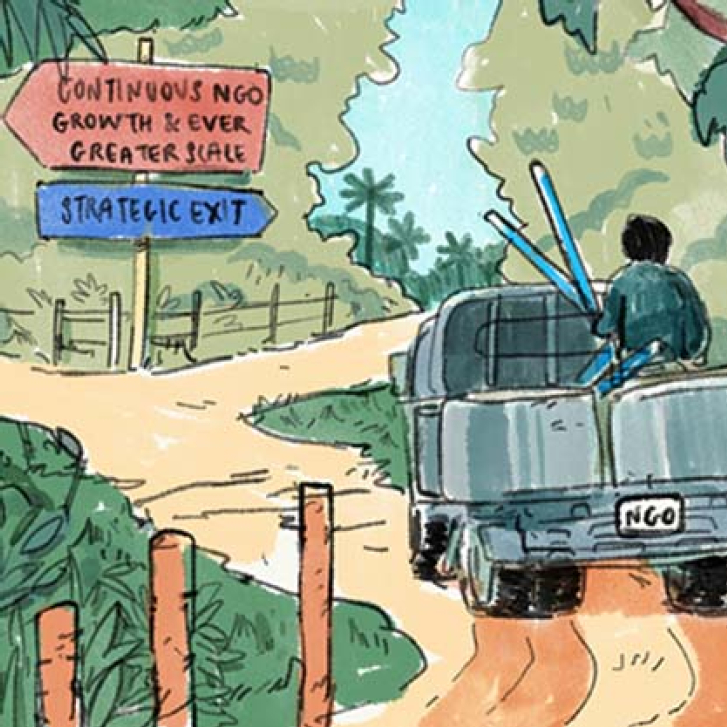
For NGOs, impact comes in different forms and to track the cycles of social change work, we must think across the tangibility and the speed of emergence of change.
With an understanding of these 10 funding models, nonprofit leaders can use the for-profit world's valuable practice of engaging in succinct and clear conversations about long-term financial strategy.
Fair Trade-certified coffee is growing in sales, but strict certification requirements are resulting in uneven economic advantages for coffee growers and lower quality coffee for consumers.