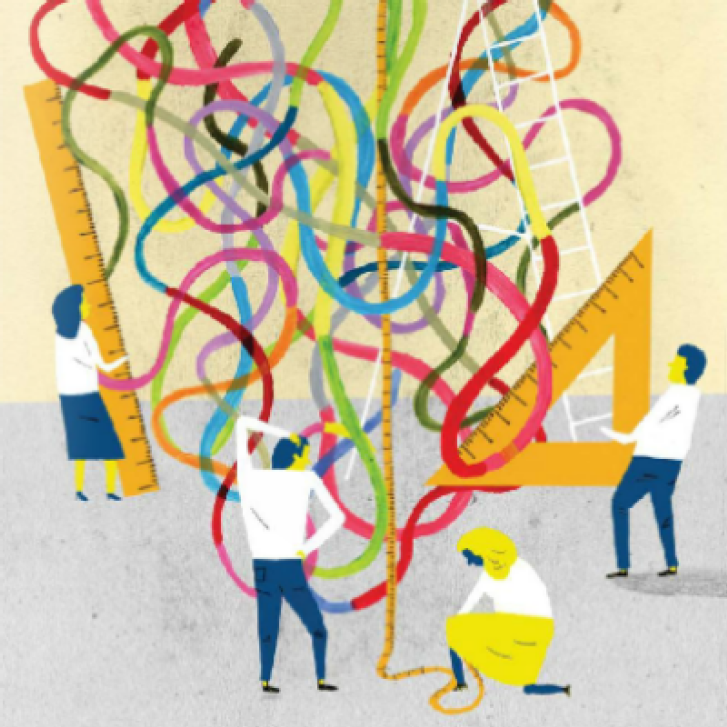
How Funders Can Make Disability Visible
Disability is a relatively untapped area of investment for philanthropy, but one that offers promise of change and multiple avenues for donor impact.
How can you scale your social impact across borders and advance your giving strategies? Where do you start and what do you need to know about mechanisms for global charity? SSIR publisher Michael Voss speaks with Kelsey McCarthy of the Charities Aid Foundation of America and Fred Kaynor of Schwab Charitable. A sponsored podcast developed with the support of DAFgiving360.
Insightful quotes and summaries of sessions from the “People, Power, Resources: Enacting an Equitable Future" conference.
Four principles were key to the success of the COVID-19 Solidarity Response Fund, a joint effort of the UN Foundation and the World Health Organization to raise hundreds of millions of dollars to help nations around the world survive the pandemic.
Implementation science has not advanced equitable outcomes routinely, explicitly, or intentionally. Here’s how it can.
With an understanding of these 10 funding models, nonprofit leaders can use the for-profit world's valuable practice of engaging in succinct and clear conversations about long-term financial strategy.
A decade of applying the collective impact approach to address social problems has taught us that equity is central to the work.
Too many people believe social value is objective, fixed, and stable, when in fact it is subjective, malleable, and variable.
To do as much good as possible with limited resources, funders should look to woefully underfunded protest movements.
Racial bias creeps into all parts of the philanthropic and grantmaking process. The result is that nonprofits led by people of color receive less money than those led by whites, and philanthropy ends up reinforcing the very social ills it says it is trying to overcome.