


sponsored
Hacking the Bias in Big Bets
The president of Echoing Green explains how to get more big bets to organizations led by people of color.
The president of Echoing Green explains how to get more big bets to organizations led by people of color.
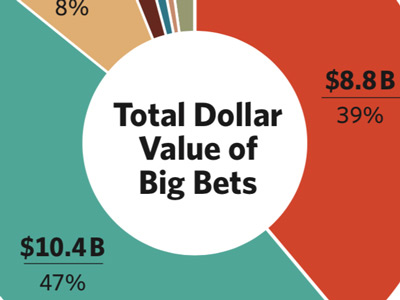
Among the big donors were the National Fish and Wildlife Foundation, the Bill & Melinda Gates Foundation, and Bloomberg Philanthropies.
Five insights about social mobility and the role of big bet philanthropy.

These five examples of large investments demonstrate the enormous impact they can have on the world’s most pressing problems.

By wielding their deep experience in distressed local communities and using four methods for channeling investment into marginalized regions, foundations can play a deciding role in the success of the Opportunity Zone federal tax incentive.


With an understanding of these 10 funding models, nonprofit leaders can use the for-profit world's valuable practice of engaging in succinct and clear conversations about long-term financial strategy.

A decade of applying the collective impact approach to address social problems has taught us that equity is central to the work.

Too many people believe social value is objective, fixed, and stable, when in fact it is subjective, malleable, and variable.

To do as much good as possible with limited resources, funders should look to woefully underfunded protest movements.

Racial bias creeps into all parts of the philanthropic and grantmaking process. The result is that nonprofits led by people of color receive less money than those led by whites, and philanthropy ends up reinforcing the very social ills it says it is trying to overcome.