Breaking Through the False Choice Between Mission and Liquidity
A look at three business structures that let social enterprises scale without sacrificing purpose.
A look at three business structures that let social enterprises scale without sacrificing purpose.

Funders and others can better support the involvement of those who use social services in service design and implementation. And by doing so, they can generate more meaningful, systems-level impact.
The dogma in business school education is that faculty’s research should be relevant, yet serving our students also means questioning what relevance leaves out.

The journey toward greater diversity, equity, and inclusion has no fixed endpoint, but here are a few places to start.

How a family-planning group and an environmental organization banded together to foster the health of forests, fisheries, and families at the same time.
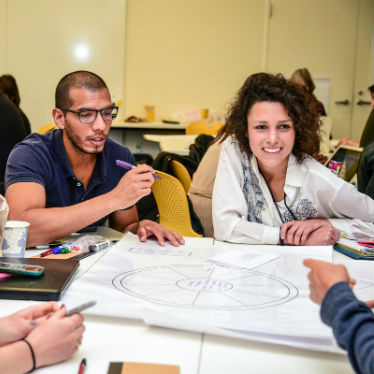
New research shows there are clear benefits to strengthening the complex environments that enable place-based innovation.
Reframing the questions we ask about values-driven leadership underlies a not-so-modest proposal to inspire and enable real change in management education and management practice.
Most models for developing networks for collaboration emphasize discovering or clarifying purpose as the first step. But purpose doesn’t always have to manifest in the form of a single vision or strategic plan shared among all participants.
Personal experience is central to the education and development of managers.
American civil society has a history of and reputation for political independence—and alongside it, accountability, transparency, and governance. But these unique qualities are at risk.