


Ten Nonprofit Funding Models
With an understanding of these 10 funding models, nonprofit leaders can use the for-profit world's valuable practice of engaging in succinct and clear conversations about long-term financial strategy.

With an understanding of these 10 funding models, nonprofit leaders can use the for-profit world's valuable practice of engaging in succinct and clear conversations about long-term financial strategy.
Former U.S. Ambassador to South Africa, James Joseph believes we must support those over 50 launching new careers later in life so they may continue to make significant contributions to society. In this audio lecture recorded at the Encore Career Summit, sponsored by the Center for Social Innovation at Stanford, Joseph reflects on what it takes to be a great leader in the second half of life. Using Nelson Mandela as a prototype, he reflects on how skills such as the ability to work with one's enemies are critical elements of the mature leader.

In India and Africa, syringes are frequently reused, despite the obvious dangers of cross infection and death. Marc Koska talks about his involvement with Star Syringe, which designed and licensed an auto-disable syringe that prevents syringe reuse. He discusses how single-use syringe adoption is progressing in India, and also talks about the activities and aims of his charity SafePoint Trust.

If you haven't bought a flat-screen TV yet, chances are you're waiting for the prices to drop. Technologies get cheaper by virtue of the "experience curve," a phenomenon where, as companies get better at what they do, costs become lower. In this Stanford Social Innovation Review sponsored audio lecture, Robert Searle argues that nonprofits also can have experience curves, achieving a greater volume of outcomes for the same cost. He discusses the types of outcome metrics on which nonprofits should focus.
Research shows that men may be more effective than woman at utilizing microfinance investments.
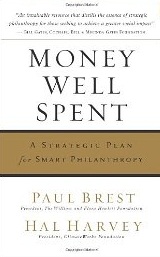
Money Well Spent: A Strategic Plan for Smart Philanthropy by Paul Brest and Hal Harvey

What fuels the creation of a nonprofit organization? In this panel discussion, sponsored by the Stanford Center for Social Innovation, panelists talk about their experiences founding an education-related nonprofit in the United States and a microenterprise in Africa. They explore how they came up with the ideas for their enterprises, how they focused and manifested those ideas, and what smart and not-so-smart choices they made along the way. A portfolio manager adds her insights on what elements make a startup appealing to potential funders.
Group-think extends to swarms of social activism.
How can the United States and the world benefit from the work of people who have been dedicated to social change over the last 30 years? What can those with the most diverse array of backgrounds and careers do to impact social, economic, and political policy, particularly in this unprecedented era of new political leadership? In this panel discussion from the 2008 Encore Careers Summit, activist leaders from the women's, civil rights, and environmental movements discuss how we can reinvent this country by drawing on lessons from the past.

Should the internet be regulated? In this audio lecture, Jeffrey Eisenach presents the potential for harm caused by cyberspace while outlining the challenges faced by regulation to the digital economy. In the end, he emphasizes the necessity of global institutions and frameworks to bring order to the online sphere.