


 (Illustration by iStock/Francesco Scatena)
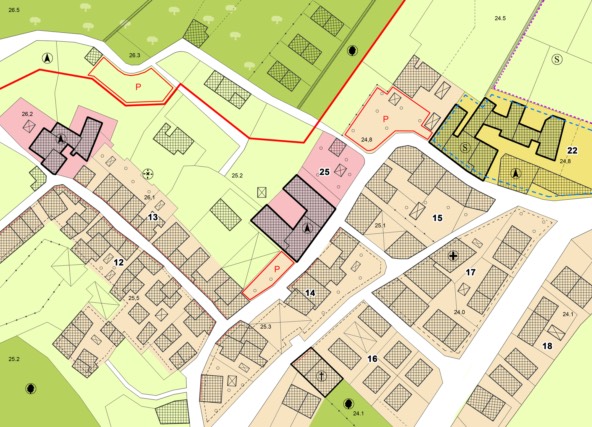
Zoning shapes much of people’s lives. The slicing up of urban and rural space into various zones with different land-use and development regulations can determine everything from the schools or jobs a person can access to the air quality in their neighborhood. The Center for Zoning Solutions, an initiative launched by the nonprofit organization Smart Growth America in October 2024, wants to improve lives by promoting and implementing zoning reform that addresses inefficient and exclusionary space regulations to foster healthier, more sustainable, and more equitable communities.
Calvin Gladney, Smart Growth America’s former president and CEO, says the Center for Zoning Solutions’ work is nonpartisan and urgent. Housing costs have outpaced income growth in the United States over the past two decades, increasing the rent burden and putting homeownership out of reach for many. Those rising costs are driven partly by a housing-supply shortfall of as many as 5.5 million units. “That shortage of housing goes back to the invisible infrastructure of zoning,” Gladney says. “Those rules usually dictate what’s getting built and how and how easily.”
In addition to the housing crisis, the Center for Zoning Solutions addresses disparities produced by long-standing inequitable zoning policies. “Land use and zoning have traditionally been used for exclusion, for segregation, to intentionally put up barriers to especially lower-income families and families of color being able to really fully be part of their communities,” explains Chloe Gurin-Sands, a program officer at the Robert Wood Johnson Foundation (RWJF), which has provided $1.7 million to the Center for Zoning Solutions to support its early research, convenings, and technical assistance programs for community-based organizations.
Research shows that where a person lives can drastically affect their life expectancy, with dozens of US cities home to people who can expect to live at least 20 fewer years than those in other neighborhoods. Cities with greater degrees of racial and ethnic segregation tend to have larger disparities in life expectancy, with communities of color expected to live shorter lives than those in majority-white neighborhoods. Zoning codes contribute to these disparities because they determine where housing is built in relation to commercial and industrial properties and amenities, such as parks. Historically, neighborhoods that are home to low-income families and communities of color have been planned with fewer health-promoting amenities and situated nearest to polluting industries.
To address these issues, experts and practitioners at the Center for Zoning Solutions conduct research, provide direct technical assistance and consulting services to communities navigating zoning reform, and advocate for evidence-backed legislative solutions. The center takes an interdisciplinary approach, employing an in-house team of experts on housing and land use, transportation and infrastructure, and economic development and partnering with coalitions of real estate developers, planners, engineers, designers, and others responsible for implementing zoning policies.
Gurin-Sands says the Center for Zoning Solutions’ goals align with those of the RWJF’s Healthy Communities portfolio. “We’re really thinking about how we can create the healthiest possible communities, where regardless of your ZIP code, everyone can have access to a safe, stable, affordable community.” Funding from the Barr Foundation, which has granted Smart Growth America more than $1.4 million since 2021 to support its research and policy-making efforts, also helped launch the center.
With this support, Gladney says, the center will become a home for the growing zoning-reform movement. As it enters its second year of operation, it is preparing for a series of convenings, which will break down silos and bring together researchers, practitioners, and community members to share solutions and develop core principles for zoning reform with broad applicability.
“Our vision is [to build] a country where no matter who you are or where you live, you can enjoy living in a place that’s healthy, prosperous, and resilient,” Gladney says.
Read more stories by Marianne Dhenin.