


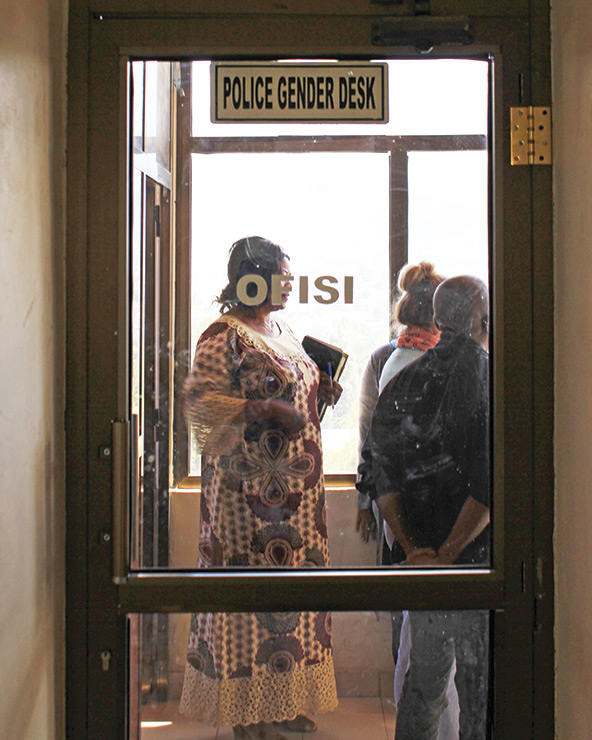
 Together for Girls’ data research led to the creation of the police gender desk in Mbeya, Tanzania. (Photo courtesy of Together for Girls)
Sexual violence against children happens everywhere—from the family room to the confessional, the doctor’s office to the rural village latrine. From wealthy suburbs where men lure teenagers to A-list parties to slums in the developing world where predators lure starving children with food, sexual violence against children is all around us, from Park Avenue to the darkest alleys of Maputo, Mozambique.
Children who experience this violence are at greater risk for lifelong, destructive consequences, including HIV infection, chronic diseases, crime, and drug abuse, as well as debilitating mental health problems.
No child is safe from sexual predation and sexual violence. But girls—particularly adolescent girls—are at the highest risk. According to the United Nations Children’s Fund (UNICEF), one adolescent girl dies every 10 minutes from some form of sexual violence. Statistically, it is the people closest to these girls—parents, caregivers, peers, and relatives—who perpetrate these acts. Girls are also victims of harmful practices such as child marriage and female genital mutilation (FGM), which can lead to a lifetime of health problems, more violence, and even death. According to the World Health Organization (WHO), “Physical and sexual violence is an epidemic public health problem that affects more than one third of all women and girls globally.” That is more than 1.3 billion women and girls.
According to UNICEF’s Division of Data, Research and Policy, “Girls’ low status in society and within the family, along with the tendency of men and boys to wield power, especially over girls’ sexuality, are key factors in the high rates of violence against adolescent girls. ... Gender inequality contributes not only to the pervasiveness of violence against girls, but also to its acceptability.”
The right of adolescent girls to be protected from all forms of violence and discrimination is guaranteed under the United Nations’ “Convention on the Rights of the Child,” as well as the “Convention on the Elimination of All Forms of Discrimination against Women.” However, these conventions are widely ignored, as are laws in many countries that prohibit violence against girls, including laws against child marriage and FGM.
Such disregard includes the United States, where only three states—New Jersey, Delaware, and Pennsylvania—have fully banned child marriage. According to the NGO Girls Not Brides, globally there are 650 million women who were married as children, and 12 million girls are married as child brides each year. Child marriage serves as a socially acceptable access point to sexual violence against girls.
Practices like FGM perpetuate sexual control of girls. In 2020, only 50 countries have banned the ritual, but FGM is still practiced in all those countries, including the United Kingdom and throughout the European Union. The United States does not currently ban FGM.
These facts underscore the critical need for an organization like Together for Girls to address this global gender violence.
Founded in 2009, Together for Girls is a public-private partnership with five United Nations agencies, several private sector organizations, and more than 20 countries in Africa, Asia, North America, Latin America, and the Caribbean. With these partners, the organization generates both comprehensive data and solutions to this public health and human rights epidemic.
“Sexual violence is one of the largest pandemics of our time,” says Daniela Ligiero, the CEO and executive director of Together for Girls. “Some form of sexual abuse—including inappropriate touching, incest, child pornography, and rape—happens each year to 150 million girls age 18 and younger around the world—or a figure of 1 in 10. We need to have more extensive data to show the effects, the magnitude, and the consequences of what’s happening.”
It is the lack of data, she explains, that perpetuates what she calls this “silent pandemic.” “Without meaningful data,” Ligiero adds, “it is impossible to make informed policy decisions” to stop it.
A Nested Crisis
It is fitting that an organization dedicated to the power of research was founded through research itself. In the 2000s, Gary Cohen, executive vice president of the medical device company BD, initiated collaborations across the public, private, and NGO sectors to address health needs in emerging countries. One area of focus was strengthening and expanding the HIV/AIDS diagnostic capacity of health systems in sub-Saharan Africa—the area with the worst HIV/AIDS crisis in the world.
“It was apparent that girls and young women were not being infected by their male counterparts of the same age—they were being infected by men considerably older than them,” says Cohen, the former chair of the Centers for Disease Control and Prevention (CDC) Foundation, current executive vice president for Global Health, and UNICEF board member. “I dug deeper into this issue and uncovered the many injustices girls experience with respect to sexual violence. I discovered this didn’t only impact their vulnerability to HIV—it also impacted their health and human rights in many other ways.”
What Cohen uncovered was a disproportionate number of HIV infections among girls and young women. According to USAID data from 2015, adolescent girls and young women account for 74 percent of new HIV infections among adolescents in sub-Saharan Africa; nearly 1,000 are infected with HIV every day.
Cohen also collected data showing that more than half of the adolescent girls and young women victimized by sexual violence were under the age of 15. And, furthermore, he found that this victimization correlated with a number of catastrophic health crises: Many girls dropped out of school and engaged in substance abuse; they experienced chronic depression and sometimes committed suicide; they also contracted HIV/AIDS and other sexually transmitted diseases, had unwanted/forced pregnancies, and died in childbirth.
These findings stunned Cohen. “Something needed to be done,” he says. “I simply could not accept these injustices. I couldn’t just observe all this and not act.”
Cohen used his connections as his first step in finding a solution. “My intention was to raise the visibility of this problem so that an established health agency would mobilize a response,” he explains. “So, I met with the leaders of UNICEF, CDC, President’s Emergency Plan for AIDS Relief (PEPFAR), the Joint United Nations Programme on HIV/AIDS (UNAIDS), and others.”
Every single organization he spoke to agreed that this was a serious issue, but, he notes, “at the time, none of these organizations were ready to make this issue a central priority for their work.”
Undeterred, Cohen crafted his own solution—with the help of a former US president. “I decided to mobilize a new partnership to take on this challenging problem,” he says. “At the 2009 Clinton Global Initiative (CGI) annual meeting in New York City, [former US] President Bill Clinton and I announced and launched the new Partnership to Address Sexual Violence Against Girls, which soon after was renamed Together for Girls.”
Together for Girls’ first initiative was to assist UNICEF in assessing the victimization of girls in Swaziland through the use of a field survey. It was through this initial study that Together for Girls entered into a full partnership with UNICEF and CDC, with UNICEF providing the funding.
“I thought maybe this was normal,” Upendo says. “My body is what I was using to pay money for the rent and the house.”
The survey’s results proved its necessity. The field responses, according to Rodney Hammond, the now-retired former director of the CDC’s Division of Violence Prevention, were “up as high as 80 percent”—an exceptional response rate. Of the 1,244 women and girls ages 13 through 24 who responded, a full third reported an incident of sexual violence prior to turning 18.
Together for Girls concluded, in its report published in the British medical journal The Lancet in 2009, that “knowledge of the high prevalence of sexual violence against girls in Swaziland and its associated serious health-related conditions and behaviors should be used to develop effective prevention strategies.”
According to Hammond, the Lancet report was widely disseminated and was the first study of its kind to clarify that such field assessments could be done effectively, “particularly in difficult circumstances in a developing country.”
In response to the report, the government of Swaziland took swift action. Within months, Swaziland’s Deputy Prime Minister Themba N. Masuku reported to WHO that the prevention strategies outlined in the survey’s recommendations were not only doable but essential, and in his statement he urged other nations to follow suit.
The success of this initial field survey and response inspired Together for Girls to focus on data collection as a basis for creating programmatic change. Over the past 11 years, that effort has expanded dramatically. With each country the nonprofit has partnered with, Together for Girls has utilized their data to raise awareness and create evidence-based solutions to prevent and end sexual violence against girls.
Since 2009, $100 million in resources have been leveraged to achieve Together for Girls’ partnership goals, and at least $20 million are contributed to the partnership annually. The majority of funding for the nonprofit comes through their major partners: the CDC Foundation; the United Nations Foundation; the US Fund for UNICEF; and recently joined partners, the Global Partnership to End Violence Against Children and the UN Special Representative of the Secretary-General on Violence Against Children. The CDC Foundation also solicits donations from individual and corporate donors on behalf of Together for Girls.
Data for Change
The partnership efforts of Together for Girls operate in three areas: conducting national surveys and collecting data to document the magnitude of sexual violence against girls to inform government leaders, civil society, and donors; supporting a national-level plan of action with interventions tailored to address sexual violence, ranging from policy forums and legal reform to improved services and community-based approaches; and launching communications and public awareness campaigns to draw attention to the issue in order to motivate changes in societal and gender norms and behaviors.
Together for Girls’ landmark research project—the Violence Against Children Surveys (VACS)—has been conducted in 20 nations, including Haiti, Kenya, and Colombia. Inspired by the successful Swaziland survey, VACS measure and document the extent of sexual, physical, and psychological violence against children within a country. They also identify risk factors as well as consequences of violence, including the link between gender inequality and HIV infection—Cohen’s initial connection of interest. With the findings, a nation can design and implement evidence-based solutions to eliminate sexual violence against children.
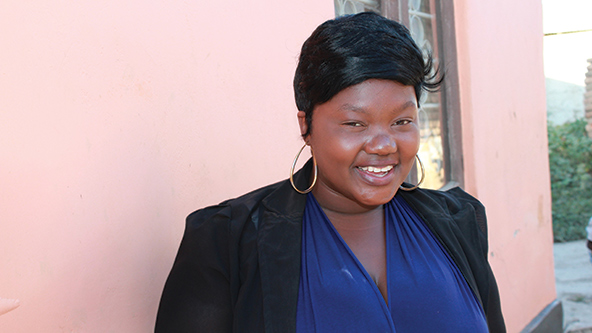 After a childhood plagued by sexual violence, Upendo A. is now an ambassador to one of Together for Girls’ partner programs. (Photo courtesy of Together for Girls)
In the Colombia VACS, for example, the data were collected in 2018, and a multisector conference was held in 2019 to discuss the findings and craft actionable takeaways. Nine strategies were identified in conference discussions and then presented in the final 2020 VACS report; these included “transforming traditional and harmful gender norms” and “improving access to services for victims of sexual violence.”
The combination of foundational assistance from Together for Girls and governmental commitment to systemic change can transform individual lives. Take, for example, the life of Upendo A. (full surname withheld). An orphan growing up in Mbeya, Tanzania, Upendo moved from home to home, and at 9 years old she was raped for the first time. Poverty-stricken, with no money for food or school fees, she was forced into sex with a series of older men just to survive. “I thought maybe this was normal,” she says. “My body is what I was using to pay money for the rent and the house.”
This sexual and physical violence continued for years. Soon after Upendo gave birth to a son, at age 17, her life changed when she met a peer educator working with the Henry M. Jackson Foundation, an implementing partner of the US President’s Emergency Plan for AIDS Relief’s DREAMS partnership, which aims to reduce rates of HIV among adolescent girls and young women living in countries with large HIV burdens. From this connection, she joined an education and counseling program, where she discovered her natural abilities as a speaker. Now she is an ambassador to the program, helping identify vulnerable girls in similar circumstances and assisting them in accessing services.
The first girl who Upendo helped was being sexually abused by her father. “This girl was 9 years old, and it hurt because I knew this was exactly where I was when that happened to me,” Upendo says. She encouraged the girl to report her story, and as a result, the man was arrested and convicted of the crime. Through Together for Girls, Upendo has so far helped 324 girls receive services.
Upendo’s story is regrettably commonplace. According to the Tanzania VACS, more than one in four girls experience sexual violence before the age of 18, and 57 percent experience physical violence. Only 13 percent of girls report receiving care for sexual violence.
The Tanzania VACS exemplifies how Together for Girls implements their data into action. The VACS led to a national action plan, which in turn mobilized more resources for violence prevention and response. For example, the VACS included data that victims weren’t reporting sexual assault due to fear of going to the police. To overcome this barrier, UNICEF and the Henry M. Jackson Foundation funded the creation of a police gender desk, a safe, confidential space for victims to report sexual violence, helmed by trauma-informed police officers. In follow-up reporting of the desk’s effectiveness, Together for Girls found that “the gender desk [has become] a well-known resource in the community. … As a result of the gender desk, there has been a dramatic increase in reporting and convictions in Mbeya.” The success of this model resulted in it being replicated in additional districts across Tanzania.
“We need to break the silence of institutions, governments, and entire societies and communities that allow sexual violence to happen,” Ligiero says.
A Future in Lockdown
The global coronavirus pandemic has had a significant effect on Together for Girls’ operations. “With movements restricted, access to resources limited, and health care systems overstretched, we know that interpersonal violence will be exacerbated, with women and children being particularly vulnerable,” Ligiero explains.
The organization has shifted its efforts to better address the consequences of the global shutdown, which has put girls at even greater risk for harm and abuse. The increased poverty, for example, heightens the risk of sexual slavery that girls face and also leaves them with less access to help. With economic instability, Ligiero says, “girls are cut off from resources. It’s a challenging time for interventions.”
There is reasonable concern, too, that girls will face increased threat from FGM. “Girls are at even higher risk during the COVID-19 lockdown,” says Janet Fyle, who has worked with Together for Girls’ #WhyZeroFGM campaign and serves as the professional policy advisor for the Royal College of Midwives in the United Kingdom. “Some of the FGM-practicing communities we suspect see COVID-19 as an opportunity because professional focus is elsewhere,” she explains. “There would be pressure from the family for girls to undergo FGM and the added cultural beliefs that FGM could protect girls from COVID-19.”
Fyle notes that FGM is still common everywhere, and the coronavirus lockdown has meant that no one is reporting girls at risk of being mutilated. “In many parts of the United Kingdom, referrals relating to girls at risk of FGM are significantly down, risk assessments are not being done on women who have had FGM themselves. ... These girls are slipping through the gaps because the focus of health and safeguarding professionals are elsewhere on COVID-19,” she adds. “There is not an opportunity for these at-risk girls to disclose worries about being cut to professionals. Families may be seeing this as an opportunity to cut that ‘Westernized’ and ‘uncontrollable’ girl who would normally phone and report.”
Ligiero echoes Fyle’s concerns and notes that Together for Girls is worried that there are fewer safeguards for girls when they are isolated at home. “There are 1.5 billion children out of school,” Ligiero observes. “That infrastructure that we have that is there to protect children and identify abuse and suspected abuse is not there.” In the United States, Ligiero says, “calls are coming in to traditional domestic violence hotlines” from girls reporting abuse. The national sexual violence hotline at the Rape, Abuse & Incest National Network (RAINN), she notes, reports that “more than half of people reaching out since the pandemic shutdown have been minors.”
COVID-19 highlights the importance of preventive measures that heavily rely upon Together for Girls’ data. The challenge now is trying to collect new data during the pandemic. “A lot of the data we have is gotten going house to house,” Ligiero explains. “We are also trying to figure out how to get data from call lines, child help lines, et cetera. We have existing data—how can we mine those data to tell a coherent story about what’s happening? We can’t wait for things to go back to normal—there may never be normal as we knew it pre-pandemic.”
Together for Girls is trying to find solutions for reaching girls who are isolated in lockdown. “We’re working with the CDC and others—we don’t want to risk [the girls’] safety,” Ligiero says. “It’s especially challenging now, and children and adolescents are really terrified of reaching out.”
Despite these challenges wrought by the pandemic, Ligiero remains hopeful that both the work Together for Girls has done and systems that are already in place will continue to serve girls in countries in which the organization is already working.
“The advocacy is in place in many of these countries,” Ligiero says, adding that the VACS now provide reliable data for more than 10 percent of the world’s population under the age of 25, and response to them has created a network of outreach for girls and young women. “It’s essential we not let this piece slip—that we continue to maintain this outreach.”
Within the confines of the pandemic, Ligiero says, Together for Girls continues to raise awareness and expand its work in the United States—the first US city of focus being Baltimore, Maryland—by lobbying for legislation to keep serial predators out of schools and other areas like sports.
“There is a lot of work to be done,” Ligiero says. “Breaking the silence is on all of us, not just on survivors. We need to break the silence of institutions, governments, and entire societies and communities that allow sexual violence to happen. We need to make the invisible visible.”
Read more stories by Victoria A. Brownworth.