
Civil Society and American Exceptionalism
American civil society has a history of and reputation for political independence—and alongside it, accountability, transparency, and governance. But these unique qualities are at risk.
New and innovative ideas to help nonprofit leaders raise money, and to help funders and donors give more effectively (more)
American civil society has a history of and reputation for political independence—and alongside it, accountability, transparency, and governance. But these unique qualities are at risk.
A look at how three direct-service organizations in Indiana are weathering an age-old funding challenge.

Benefit Chicago demonstrates how place-based impact investing transforms a community by seeing the investment potential in everyone.

Fund for Shared Insight is pooling the cash and convictions of 13 philanthropies to build the field of end-user feedback. Can its leaders become role models for the positive change they seek to create? Open access to this article is made possible by Rockefeller Philanthropy Advisors (Fund for Shared Insight).

Organizations are increasingly turning to system change to tackle big social problems. But systems are complex, and mastering the process requires observation, patience, and reflection. To begin, here are two
approaches to pursuing system change.

The social sector has a lot to learn from the innovation network that has emerged from the post-Thanksgiving global giving movement.

Research shows that foundations are motivated by impact in their grantmaking.

In Winners Take All, writer Anand Giridharadas calls out the hypocrisies of philanthropists.
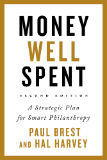
The authors of Money Well Spent reconsider their original arguments a second time around.