Marrying Empathy and Science to Spread Impact
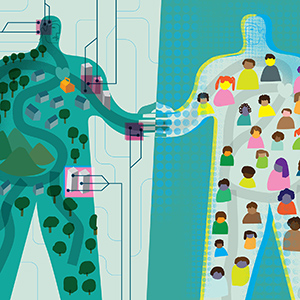
A public health innovation shows that innovators can accelerate the diffusion of products with social impact by pairing design thinking and behavioral science.
The inclusion of disabled people in your organization is not about “helping” them come on board while leaving the organization unchanged.
A commitment is only a start. After that, it takes strategy, performance management, data, planning, investment, and a relentless desire to improve.
Organizations must connect their causes to the personal aspirations of their audiences to transform public attitudes. A feature story from the Winter 2020 issue.
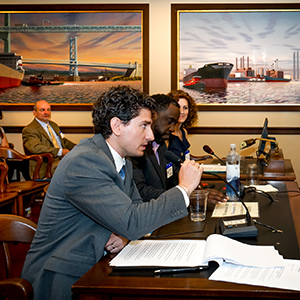
Better ways of describing how coalitions collaborate exist and naming these variations can help guide local leaders and the diverse communities they serve. See SSIR Editor-in-Chief Eric Nee's note about the Winter 2020 issue for additional insights. A feature story from the Winter 2020 issue.
System work is not about solutions; it’s about discovering and steering local pathways for change at a pace appropriate for our ability to learn and for what local communities can enact and absorb. A feature story from the Winter 2020 issue.
Rebuilding local news coverage is part of a civic-repair program we must pursue to restore the democratic promise of our cities and of our country. A Feature from the Winter 2020 issue.
The Ecosystem Services Market will enable farmers to use improvements in soil health—the key to water conservation and soil carbon sequestration—to generate ecosystem-service credits that they will be able to sell. A What's Next article from the Winter 2020 issue.
The Stepping Up Initiative uses webinars, a tool kit, and data collection to tackle the problem of people with serious mental illness being incarcerated in the United States approximately two million times each year. A Field Report from the Winter 2020 issue.
The Harambe Entrepreneur Alliance, a network of 304 entrepreneurs from 34 African countries, believes that business, rather than aid, is the key to eradicating poverty on the continent. A Case Study from the Winter 2020 issue.