Collaboration
Elevating Community Authority in Collective Impact
To achieve greater equity, we must yield to the decision-making authority of the communities we seek to help.
Going beyond traditional monitoring and evaluation to focus on feedback can lead to new innovations in the social sector.
No single organization or individual can pull off an effective storytelling campaign alone. Reaping the benefits of storytelling requires that we build better partnerships between three important players.
Input from Boston residents changed Union Capital Boston’s rewards program from providing specific material goods to distributing cash in exchange for doing volunteer activities. It also drove the creation of networking events for members. Part of a series produced for SSIR with the support of the Hewlett Foundation.

Finding viable solutions to social problems requires that we reconfigure the relationships between those who hold power over communities and those who are impacted by how that power is used.
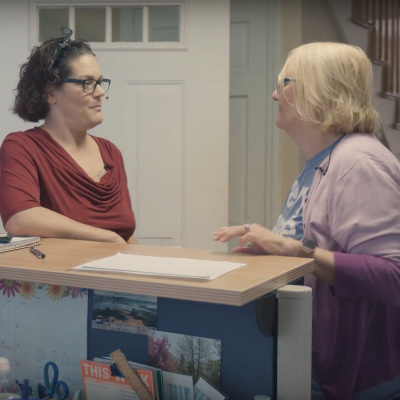
Kate Lauzon found sobriety and a role as an activist through her Massachusetts city's weekly resident feedback sessions, a gathering of civic groups known as "Working Cities Wednesdays" organized by Habitat for Humanity. Part of a series produced for SSIR with the support of the Hewlett Foundation.

How to shift the culture of philanthropy to one where funders understand they are part of—rather than in control of—social movements and systems-change work.
Personal experience is central to the education and development of managers.
Reimagining the Civic Commons claims it has built the first comprehensive set of metrics that connect the impact of revitalization to things like trust between people, neighbors' perceptions of safety, and a community’s ability to draw together people of different incomes, races, and backgrounds.
StrongMinds looks to break the cycle of depression for women in Uganda and beyond.