Government
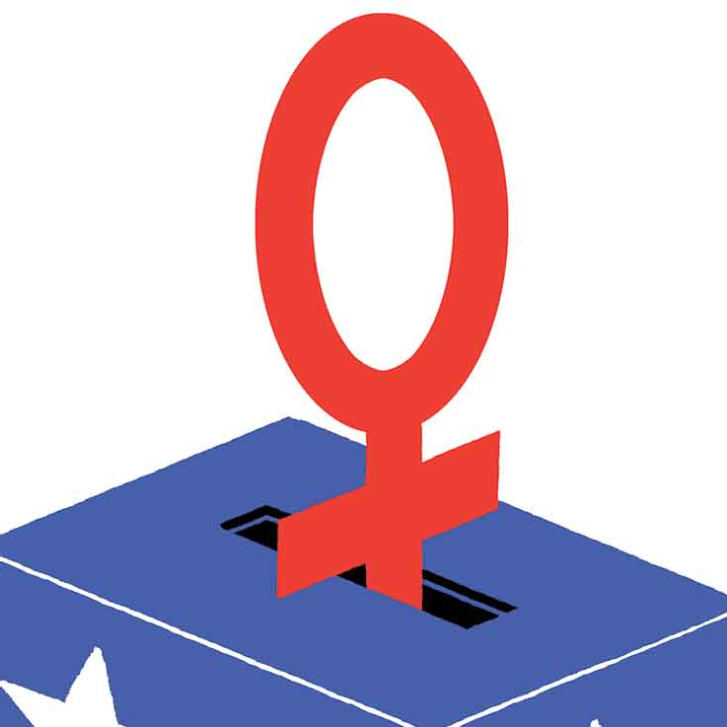
Electability Bias Against Female Candidates
Even voters who favor female candidates may withhold support because of worries about their ability to win.
The public trusts major international organizations far less than the ruling class.
For a more equitable, inclusive, multiracial, and multiethnic democracy, we must invest substantive, resourced, and long-term decision-making power in the public.
Larry Kramer of the William and Flora Hewlett Foundation and La June Montgomery Tabron of the W.K. Kellogg Foundation discuss the origins of wealth inequality and its impact on American democracy. They also share how their institutions are creating new pathways for all communities to access secure and vibrant futures. Produced in partnership with The Pew Charitable Trusts.
Corporate, government, and civil society leaders can use the collective impact approach to address structural racism, restore communities, and design a multiracial democracy.
Susan Urahn of The Pew Charitable Trusts and Sarah Rosen Wartell of the Urban Institute discuss the many challenges facing American democracy—and ways to find common ground in a polarized environment. Produced in partnership with The Pew Charitable Trusts.
Economists have obsessed over the question of negative externalities, but market arrangements can also generate positive externalities. We should consider how to harness them for public good. | Open access to this article made possible by Harvard Business School Division of Research and Faculty Development
The new public management model of governance has failed. But an emerging collaborative and democratic approach shows promise.
We created the Democracy Frontlines Fund to enable experienced anti-racist organizers to do their crucial work. They taught us how to do philanthropy better.
An excerpt from Prisms of the People on how collective action generates real, durable power.