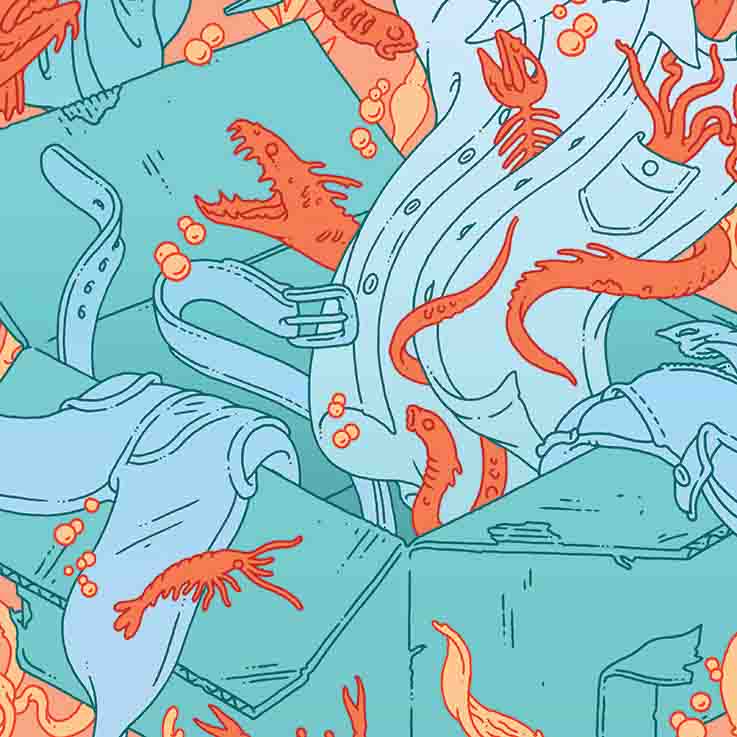
Response: Increasing Environmental and Social Sustainability at the Same Time
The fashion industry could decrease its environmental impact by shifting its sources of revenue from material and energy to labor.
As the fashion industry’s environmental footprint attracts increasingly negative attention, circular business models are promoting opportunities to sustain growth by decoupling revenue streams from resource use.
In this Up for Debate series, Ken Pucker, former Timberland COO, explains the industry’s turn to circularity and the barriers to its adoption, then researchers and experts in the sector respond.
The Minneapolis-based nonprofit QUEERSPACE Collective provides mentorship and community to queer youth at a time when they are facing endless attacks.
Native Bound Unbound is digitally documenting the long-overlooked history of enslaved Indigenous people throughout the Americas.
In Poverty, by America, sociologist Matthew Desmond argues that America’s welfare state doesn’t help those who need it the most.
Five principles based in social science that will help organizations connect their work to what people care most about.
We need to develop new processes of collective storytelling across sectors to navigate turbulent times and foster systems change.
America must invest in art and imaginative capacity.
A look at the difference between cultural and social entrepreneurship.
Jeff Skoll is one of the most creative, generous, and effective philanthropists of his time. And at age 47, he’s just getting started.