



For Collaboration Geeks: The Lodestar Database on Collaboration Models Is Up and Running!
A new database resource offers nonprofit leaders the chance to search and explore successful collaboration strategies already being used in the field.
A new database resource offers nonprofit leaders the chance to search and explore successful collaboration strategies already being used in the field.

The issue of the H1N1 influenza pandemic remains a hot topic internationally as confirmed cases are reported daily and concerns about access to the H1N1 vaccine increase. In this audio interview from the Business Roundtable's Partnership for Disaster Response, Executive Director Larry Burton talks with The Brink's Company Chairman, President and CEO and Partnership Chairman Michael Dan. The two discuss the Partnership's recent responses to the H1N1 influenza pandemic.
The Chicago Metropolitan Agency for Planning is an example of government collaboration.

Navigating social networks could well be the ultimate nonprofit management tactic. In this audio lecture recorded at the Nonprofit Management Institute, Heather McLeod Grant discusses how individuals and organizations are using networked approaches to promote social change efforts. She focuses on the work of the Monitor Institute, in particular, and offers tips on how to use social networks effectively.
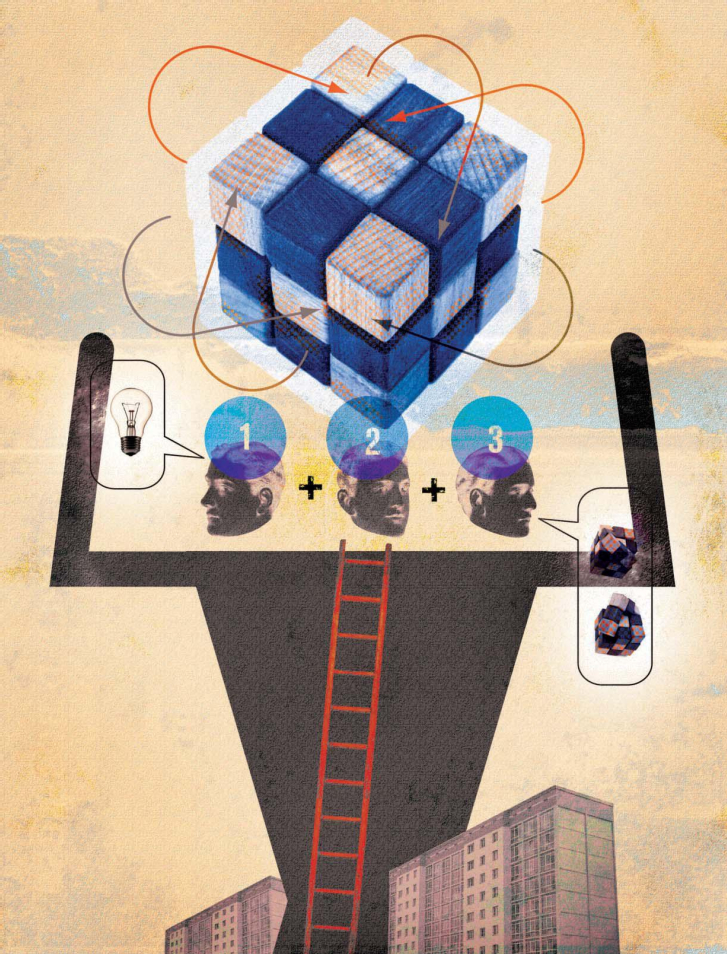
Some of the brightest ideas for social change grow in the spaces between organizations and sectors. Yet few organizations have systems that make collaboration happen. To foster innovation, organizations need to develop places where they can come together and work creatively—that is, platforms for collaboration. In this article, a management expert identifies three kinds of collaboration platforms—exploration, experimentation, and execution—and then outlines what organizations can do to put these platforms to work for them.


Large-scale social change requires broad cross-sector coordination, not the isolated intervention of individual organizations.

Professionalism has become coded language for white favoritism in workplace practices that more often than not leave behind people of color. This is the fourth of 10 articles in a special series about diversity, equity, and inclusion.

Conventional wisdom says that scaling social innovation starts with strengthening internal management capabilities. This study of 12 high-impact nonprofits, however, shows that real social change happens when organizations go outside their own walls and find creative ways to enlist the help of others.

Business leaders play vital roles in the nonprofit sector – as board members, donors, partners, and even executives. Yet all too often they underestimate the unique challenges of managing nonprofit organizations.

The deep changes necessary to accelerate progress against society's most intractable problems require someone who catalyzes collective leadership.