


Scaling and Innovation
If an organization doesn't know how to learn or scale, innovation isn't the answer to its struggles.
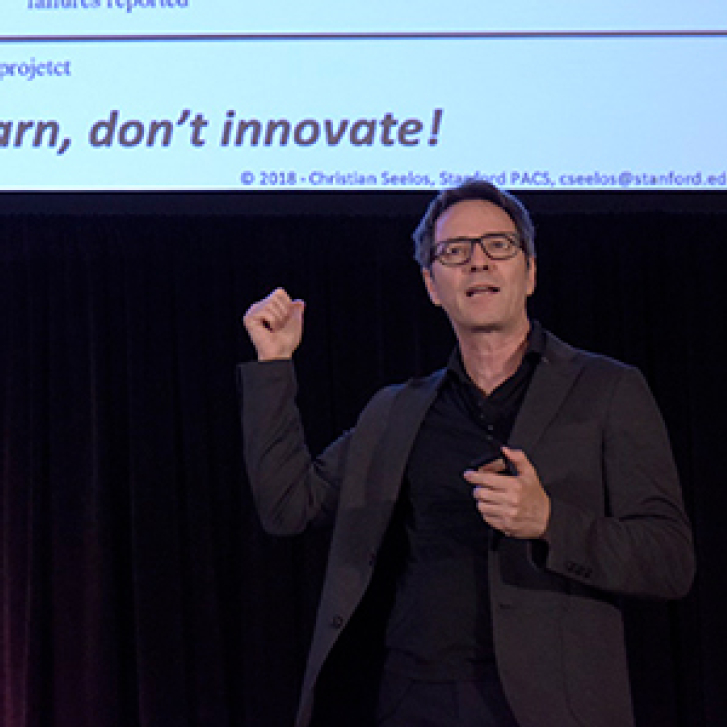
If an organization doesn't know how to learn or scale, innovation isn't the answer to its struggles.

Giving with a gender lens: a conversation on women's giving and the implications for philanthropy with Andrea Pactor of the Lilly Family School of Philanthropy; Carrie Schwab-Pomerantz of the Charles Schwab Foundation and Schwab Charitable; and Michael Voss, publisher of SSIR. A sponsored podcast developed with the support of DAFgiving360.

Give big, give now, give smart, and give to address inequity: a conversation on making the most of your generosity with Jeff Raikes, cofounder of the Raikes Foundation; Fred Kaynor, vice president of business development and marketing at Schwab Charitable; and Michael Voss, publisher of SSIR. A sponsored podcast developed with the support of DAFgiving360.

When nonprofits try to plan for scale, systems change, and sustainability at the same time, they can find the expectations for achieving each at odds with each other. The answer is a flexible approach that focuses on the mission.

The United States can restore the trust that allows civil society to flourish by emphasizing the values that have long bound us together and by adopting the newer values of shared power and racial equity.


Funders are calling for more program evaluation, but nonprofits are often collecting dubious data, at great cost to themselves and ultimately to the people they serve.

Large-scale social change requires broad cross-sector coordination, not the isolated intervention of individual organizations.

For NGOs, impact comes in different forms and to track the cycles of social change work, we must think across the tangibility and the speed of emergence of change.

With an understanding of these 10 funding models, nonprofit leaders can use the for-profit world's valuable practice of engaging in succinct and clear conversations about long-term financial strategy.

Fair Trade-certified coffee is growing in sales, but strict certification requirements are resulting in uneven economic advantages for coffee growers and lower quality coffee for consumers.