


Impact Investing Today and Tomorrow
A consortium of more than 190 professors focused on impact investing share new insights into the rapidly changing field at a critical juncture in its development.

A consortium of more than 190 professors focused on impact investing share new insights into the rapidly changing field at a critical juncture in its development.

Six leading members of the Impact & Sustainable Finance Faculty Consortium discuss trends, predictions, foibles, and tensions related to the rapidly growing field their group has been focused upon for the past four years. The first article in the Impact Investing Today and Tomorrow in-depth series.
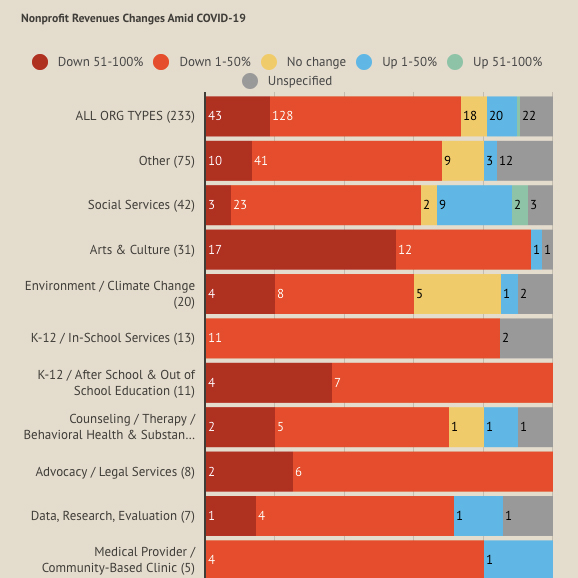
Interactive charts show how hundreds of nonprofits face dramatic changes in their operations and plans as the pandemic continues to upend life around the world. Part of a series on civil society's response to the pandemic.

Breaking down silos means starting from intersectionality and emphasizing climate justice.

Foundations helping nonprofits build their capacity to execute sustained collaborations are catalyzing an important shift on the nonprofit landscape and having an outsized impact on the ground.


With an understanding of these 10 funding models, nonprofit leaders can use the for-profit world's valuable practice of engaging in succinct and clear conversations about long-term financial strategy.

A decade of applying the collective impact approach to address social problems has taught us that equity is central to the work.

Too many people believe social value is objective, fixed, and stable, when in fact it is subjective, malleable, and variable.

To do as much good as possible with limited resources, funders should look to woefully underfunded protest movements.

Racial bias creeps into all parts of the philanthropic and grantmaking process. The result is that nonprofits led by people of color receive less money than those led by whites, and philanthropy ends up reinforcing the very social ills it says it is trying to overcome.