


sponsored
Seeking Both Problems and Solutions
The MacArthur Foundation’s 100&Change team learned a lot from the first round of grants that will boost collaboration and knowledge-sharing in the next round.

The MacArthur Foundation’s 100&Change team learned a lot from the first round of grants that will boost collaboration and knowledge-sharing in the next round.
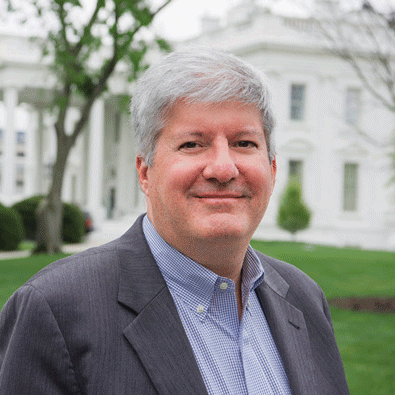
Jeff Ubois interviews Thomas Kalil of Schmidt Futures (a philanthropic initiative founded by Eric and Wendy Schmidt) about how calls to solve big problems through competitions can, when done right, galvanize innovation.
100&Change sought to add value to participants by helping to raise the profile of a variety of meaningful solutions.

Proposals for grants can offer a wealth of ideas and information to the nonprofit community, if foundations take the right steps.
How the University of Pennsylvania’s Center for High Impact Philanthropy winnowed 100&Change’s Top 200 proposals.


With an understanding of these 10 funding models, nonprofit leaders can use the for-profit world's valuable practice of engaging in succinct and clear conversations about long-term financial strategy.

A decade of applying the collective impact approach to address social problems has taught us that equity is central to the work.

Too many people believe social value is objective, fixed, and stable, when in fact it is subjective, malleable, and variable.

To do as much good as possible with limited resources, funders should look to woefully underfunded protest movements.

Racial bias creeps into all parts of the philanthropic and grantmaking process. The result is that nonprofits led by people of color receive less money than those led by whites, and philanthropy ends up reinforcing the very social ills it says it is trying to overcome.