


 (Illustration by Mitch Blunt)
The sprawling National Health and Family Planning Commission (NHFPC) in China is one of the world’s largest bureaucracies. Its reach spreads from the bustling supercities on China’s eastern seaboard to the remote villages that dot the country’s vast rural interior. For decades, NHFPC officials had responsibility for enforcing China’s One Child Policy. In their relentless drive to keep fertility low, these officials sometimes fined noncompliant families into a state of poverty or even subjected women to forced abortion or sterilization procedures.
But since October 2015, NHFPC has had to reckon with a momentous shift in its core mission. That’s when the Chinese government announced that it would begin allowing all families to have two children. (Previously, the government had rescinded the One Child Policy for certain groups.) Few people in China are likely to miss the intrusions of NHFPC bureaucrats. Yet one downside of this policy change is that it may throw hundreds of thousands of officials out of work.
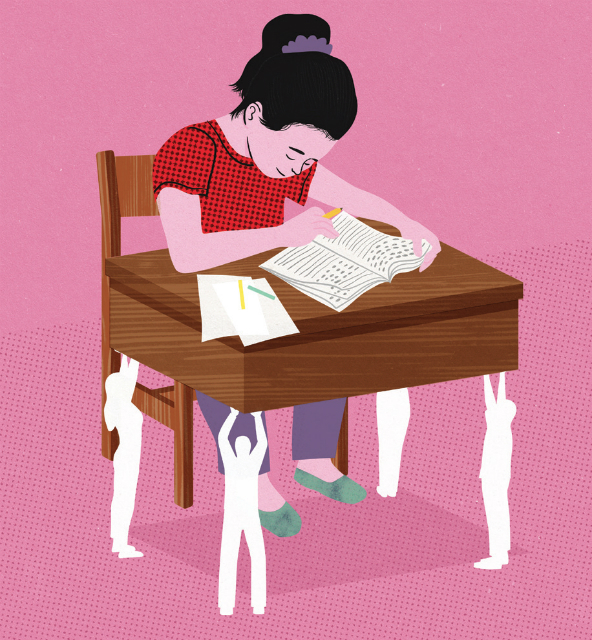
At the same time, a challenge that relates in principle to the purpose of NHFPC is growing more acute. It involves the human capital gap that separates urban and rural China. In the cities that have driven China’s rapid economic growth, many children receive ample attention from well- educated parents, and that attention helps prepare them for educational and employment opportunities. But children who grow up in nonurban areas are far less likely to benefit from that kind of parenting. As a result, they are falling behind their urban counterparts. According to a study conducted by the Rural Education Action Program (REAP), an initiative at Stanford University that we help lead, more than 60 percent of children in rural China who are under the age of 2 exhibit developmental delays.
What accounts for this gap? Are rural parents in China unwilling to spend time with their kids? Do they lack the resources needed to support their children’s cognitive and educational development? According to survey research conducted by REAP, 85 percent of parents in rural China report that they enjoy playing with their children and say that doing so is important. A majority of these parents also report that they do not face financial impediments to providing for their kids. The problem, therefore, is not one of resources or incentives. Instead, it derives largely from an absence of knowledge: Many rural Chinese parents lack a clear understanding of how to provide appropriate social and intellectual stimulation to their children.
In 2014, we launched Perfecting Parenting, a pilot effort that sought to repurpose the NHFPC bureaucracy as a vehicle for overcoming developmental delays among babies and young children in rural China. Even before the official end of the One Child Policy, we saw an opportunity to use the resources of NHFPC for this purpose. Senior officials at the agency, meanwhile, were already looking to reinvent the organization, and they viewed partnering with our team as a way to move in a new direction.
The Challenge Starts Early
At REAP, we conduct randomized controlled trials of interventions that promise to improve educational outcomes in rural China, and then we work with policymakers to scale up interventions that have proved to be effective. Among the efforts that we have tested are teacher-training initiatives, school lunch programs, and computer-assisted learning projects. Through our experience in developing these interventions, we made an important discovery: Rural children confront significant educational challenges even before they start school.
We first realized the scope of this problem in 2013, when we were carrying out an intervention to treat iron-deficiency anemia in infants and toddlers. Anemia can adversely affect children’s ability to learn, and in rural China more than half of children under the age of 2 suffer from that condition. Yet although anemia rates fell as a result of the project, babies continued to exhibit developmental delays.
Without question, the quality of education available in China’s rural schools needs improvement. But children who suffer from developmental challenges cannot take full advantage of improved schools. Recognition of that point led us to turn our attention to early child development. There is now a rich body of research that demonstrates the importance of interaction with caregivers during the first two to three years of life—a time that child development experts call the “critical period.” When young children fail to receive adequate mental stimulation during that critical window, they often face significant difficulties later in life. Tackling academic subjects such as algebra, physics, and foreign languages, for example, becomes extremely challenging.
In working with children and parents in rural China, the REAP team observed a troubling pattern. Precisely when newborn and young children are going through their critical period of development, their caregivers tend to have minimal engagement with them. Several rural mothers suggested to us that babies remember little or nothing from their early years and that talking or reading to them has no practical value.
For many parents in rural China, the Great Leap Forward—a campaign launched by Mao Zedong in the late 1950s that led to a period of famine and economic depression—remains a legacy of the not-so-distant past. As a result, these parents have inherited a mentality that causes them to devote most of their attention and resources to meeting the physical needs of their children. Doing so, they believe, is sufficient. “We don’t think about how to raise our daughter or plan for school,” said one rural father who spoke to our team. “We focus on feeding her and making sure she doesn’t get sick.”
The Solution Starts Early, Too
With Perfecting Parenting, we sought to help fill the gap between urban and rural parenting practices. Together with our administrative partners at NHFPC and our research partners at the Chinese Academy of Sciences, a state-run institution based in Beijing, we selected 70 officials from local family planning offices and invited them to become “parenting trainers.” We held an intensive training program in which they learned about early child development and about positive parenting practices. We then arranged for them to begin visiting rural families with young children for weekly hour-long play sessions. (This pilot effort covered 275 families in Shangluo, a prefecture in southern Shaanxi province.)
During each play session, parenting trainers followed an age-appropriate curriculum that we designed to help teach caregivers how to engage with children. In a hands-on way, trainers showed parents how to sing to, read to, and play with their kids. As it turns out, apparently simple activities—an animal-naming game, for instance, or a basketball-shooting exercise—can have a transformative effect: Formerly withdrawn toddlers now ran outside to greet parenting trainers when they arrived for a play session.
One such child is Little Wei, who lives in Zhe’an, a township in Shangluo. The first time that a parenting trainer named Yuerong Song visited the home of Little Wei’s family, the child peeked at him from behind a curtain. When Little Wei’s grandmother tried to engage the child with the help of some modeling clay, he would just play with the clay silently on his own. But after two months of weekly visits by Song, Little Wei had changed. He now eagerly interacted with Song through a wide range of activities. In between parenting lessons, Little Wei’s mother played with him, using techniques that she learned from Song.
But children like Little Wei and their parents were not the only beneficiaries of Perfecting Parenting. NHFPC officials benefited from the program as well. Once hated for their role in enforcing the One Child Policy, these officials now found that they were welcome in rural families’ homes. In some cases, children even addressed them as Mom or Dad.
Lijing Cai, a parenting trainer in Shangluo prefecture, says that for the first time she was able to gain fulfillment from her work as an NHFPC employee. For one case, she had to take a two-hour bus ride to visit the family of a toddler named Ruiqi. She found that Ruiqi’s smile—and the increasing confidence that he showed in their sessions—made the long trip worthwhile. “When I was busy and tired, I often did not want to go,” Cai says. “But I would think of Ruiqi’s hopeful expression every time we parted. Then I would feel that no matter how busy I was, I could not let the child down!”
When we launched Perfecting Parenting, we had two goals. First, we wanted to see whether it was possible to harness the NHFPC bureaucracy to teach caregivers how to interact productively with the children in their charge. Second, we wanted to find out whether this intervention would improve child development outcomes. Before the start of weekly home visits, we enlisted a team of evaluators to administer a test of cognitive and social-emotional skills to each participating child. At the end of the pilot, we again tested children in the program and compared their progress with that of children in a control group.
With regard to the first goal, we found that the level of parent-child interaction was 20 percent higher among Perfecting Parenting families than among families in the control group. Our study also produced a positive result with regard to the second goal: Among children in the study, the average score on a standard measure of cognitive development shifted from the below-normal range to the normal range. Today, we’re planning a new study that will gather further data on developmental changes. Chinese officials, meanwhile, are moving to implement a version of Perfecting Parenting in some provinces.
Closing China’s rural-urban human capital gap will require an enormous deployment (or redeployment) of resources. But efforts like Perfecting Parenting can have positive effects that will more than repay the country’s investment in them. “If we want to maintain [our current] level of economic development, China’s next generation will have to be smarter,” says Jianhua Cai, director of the NHFPC Training and Communication Center. (Jianhua Cai is no relation to Lijing Cai.) “We cannot depend only on urban children. We cannot waste even a single person.”
Read more stories by Scott Rozelle & Alexis Medina.