


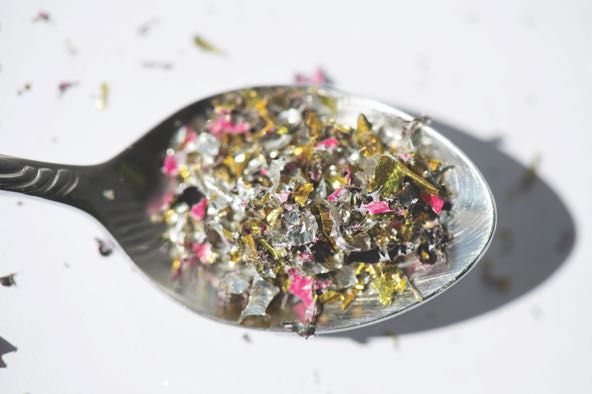
 Microplastics have contaminated oceans and seafood. Researchers may have discovered a solution. (Photo by European Commission [Lukasz Kobus]-Wikicommons)
An estimated 171 trillion pieces of plastic are lurking in the world’s oceans, and plastic production is expected to triple by 2060 if no changes are made. This growth could result in a significant increase in plastic waste, which threatens marine life and contaminates seafood with microplastics. Already, the Great Pacific Garbage Patch, a point in the Pacific Ocean where currents converge, bringing together plastic waste, has grown to cover an area twice the size of Texas.
But what if, instead of lasting up to 450 years in the ocean, plastic dissolved when it came into contact with salt water. Thanks to research from the RIKEN Center for Emergent Matter Science and the University of Tokyo, plastics that are as strong, stable, and adaptable as those popular today, but are also dissolvable in salt water and do not generate microplastics, could soon be available on supermarket shelves.
Researchers created the new plastics using supramolecular chemistry, linking two ionic monomers through reversible interactions. One of the monomers is a common food additive. The other is used in fertilizers and soil conditioners. Both are metabolizable by bacteria, ensuring biodegradability once the plastic is broken into its components. To dissolve the new supramolecular plastic, one simply scratches through its bio-friendly protective coating and introduces it to salt water. It takes about 10 hours to disappear.
“We lock this reversible process so that once you form this type of polymer, then, because of the absence of the backward reaction, it must be very stable and mechanically very strong,” explains Takuzo Aida, lead researcher on the dissolvable plastics project at RIKEN. “Then we unlock this temporarily irreversible process, to make it reversible again, by using the natural environment as a key.”
As researchers have come to better understand and communicate the threats of plastic pollution in recent years, Aida grew interested in revisiting earlier work published by Dutch scientist Bert Meijer. A professor at Eindhoven University of Technology, Meijer in 1997 patented a plastic based on small molecules, rather than the macromolecules that typically make up plastics.
Back then, developing a plastic-like material using small molecules was a “scientific curiosity,” Meijer says. The industry did not consider the prototype a possible substitute for other plastics because it lacked certain mechanical properties needed to make it attractive to companies that use plastics for packaging, textiles, and other applications.
Aida and Meijer began working together in 2019 to solve that problem. RIKEN’s supramolecular plastic is their answer. The new product, details of which were first published in Science in November 2024, is mechanically strong and a viable substitute for other plastics. “The beauty of the materials is that they’re extremely stable, like plastics, until the moment that you put salt on them,” Meijer says.
After the team published its findings, UTokyo IPC, an investment company owned by the University of Tokyo, funded a startup to bring the dissolvable plastic to market. The company has connected with more than 40 manufacturers interested in the new material. Still, to make a dent in the global plastic-pollution issue, Aida says, consumers and governments will need to pressure less enterprising companies that may be hesitant to disrupt the status quo and invest in the new product.
“The progress is enormous, but it’s also a huge challenge,” Meijer says. “Still, it’s hard to believe that it won’t, at the end, come to market.”
Read more stories by Marianne Dhenin.