





In this episode
Revitalizing communities that have been hit hard by post-industrial decline can take decades, but government and philanthropy often operate on short-term funding timelines. In this episode, Barbara Wheeler-Bride talks with Bo Kemp, CEO of the Southland Development Authority, about this mismatch, and how his nonprofit is working with individuals, businesses, and municipalities in Chicago's south suburbs to reinvigorate the economy. Their innovative strategies, including owning assets like housing and property, could provide a template for other struggling regions across the United States. Giving With Impact is developed with the support of DAFgiving360®
Guest
Guest
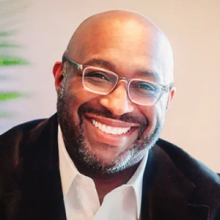
Bo Kemp is the CEO of the Southland Development Authority.
Resources
-
“A Model for Restoring the Rust Belt,” an SSIR case study about the Southland Development Authority and how it’s breathing new life into Chicago’s south suburbs.
-
“How Will Your Nonprofit Survive?” an SSIR article authored by Bo about why innovation is crucial to sustain philanthropic missions.
-
Southland Monarch Fund, a real estate, place-based investment fund sourcing high-impact projects for catalytic growth in the Southland region.
-
“Data Centers Are the Casinos of the Next Decade,” a blog post by Bo that he discusses in the episode
Transcript
Bo Kemp
A lot of the decisions that people are making, they don't realize, but they are 25- to 50-year decisions, not 10- to 15-year decisions, and they're very rarely a 3- to 5-year decision. And so that mismatch and alignment around timeframe is the cause of a lot of difficulty that we experience in working with municipalities or government and for government understanding and addressing the issues of the community.
———
MUSIC
———
Barbara Wheeler-Bride
This is Giving With Impact. I’m Barbara Wheeler-Bride, an editor at Stanford Social Innovation Review. Welcome to a show about what’s at the heart of achieving more effective philanthropy. We’re produced by SSIR with support from DAFgiving360®.
In this episode, we take a trip to the Southland of Chicago, a region hit hard by industrial decline, but one where a local nonprofit called the Southland Development Authority is working with individuals, businesses, and municipalities to revitalize the economy.
I had the chance to talk with Bo Kemp, the CEO, about the forces that have destabilized communities all across America and the strategies, including investing in affordable housing, his organization is deploying to reinvigorate them.
We also talked about the mismatch, as Bo says, of philanthropy’s short-term funding timelines and the much longer timelines of meaningful economic development. And Bo has thoughts on data centers as potential vehicles for economic growth, too.
Now, my interview with Bo Kemp.
———
Barbara Wheeler-Bride
Bo, can you tell us about your background and what brought you to the Southland Development Authority?
Bo Kemp
Sure! I started my career on Wall Street. I was an analyst and an associate at Morgan Stanley, left, and actually started an internet company back in 1994-95, which was very early and before the venture capital world had really acknowledged the internet as the growth engine that it had become.
After having left Morgan Stanley, I worked also in private equity for a little while at a group called TST Capital Group, which was one of the very early Black-owned private equity and venture capital businesses. I was one of the first junior people that was hired at the organization. So I kind of had a chance to learn from the people who had been in this industry — focused on, in many cases, overlooked opportunities and overlooked entrepreneurs — for a very long time, which was a blessing. I left there and went and started a media company with the guys who founded VIBE magazine, so I was in the media space for a while.
That experience, all of that combined, put me in just a very weird place relative to a lot of my peers. But one of the businesses that I was launching in 2005 in New Orleans got washed away with Katrina. And when it did, I ended up having the guy that I started the internet company with introduce me to someone who was running for mayor of Newark, New Jersey at the time, named Cory Booker. And he was looking for help in trying to think: How do you turn around these kind of post-industrial cities like a Newark, New Jersey?
And so I spent what I thought would be six months just being thoughtful with him. But that opportunity to think strategically about how do you turn around a place like Newark turned into a role of me working as what's called the business administrator for him. It's my first opportunity to work in anything government-related. That work I did for several years before I went back into the private sector. But because of that experience, I stayed connected to a lot of public sector opportunities.
And when I moved to the Chicago area in 2015, I was asked shortly thereafter to become part of the Council of Economic Advisors, which is the organization for Cook County that kind of helps Cook County President Toni Preckwinkle think through economic development. And that group was evaluating how to support the needs of the south suburban portion of Cook County and Will County. And much of that south suburban area looks and feels like the post-industrial cities that I had previously done work with, like a Newark in some areas and other places.
I originally was the chair of the organization. And then that role of chair turned into me being the CEO in 2021, and I've been in that role ever since. So I was part of the organization in its formation, and then I became chair and ultimately the CEO.
Barbara Wheeler-Bride
Can you take me on a trip through Southland? Where am I at when I'm in Southland? What did the boom times look like?
Bo Kemp
So just to orient someone about where the Southland is: For those who are familiar with the Chicago region, if you were to start at Lake Michigan, which is the furthest east boundary of the city of Chicago and go straight out Highway 55, pretty much everything that would be essentially to your south or to your left if you were driving west on that is the Southland — outside of the border of the city of Chicago itself. So when you think of the South Side of Chicago, it borders the Southland of Chicago. And the dynamics and much of the issues are very, very similar between them, but the Southland extends all the way to the border of Indiana, all the way out into Will County. And so what it is comprised of is a mixture of farmland, sprawling suburban areas that look like suburbs anywhere that you'd find in America, but also densely populated urban areas that look like the city of Chicago.
It has some advantages, because it already has a built infrastructure, so you can literally take the train to get to a lot of these places. And the reason that it has this built infrastructure is because of its history. So when Chicago was built as the second city, and it was the center point for the United States, all of the infrastructure in the United States to cross the United States basically was built through Chicago. So literally right now, two of every three containers that you see on the back of a boat or a truck or a train that travel through North America literally go through Chicago and the south suburbs. And because Chicago was always densely populated, the vast majority of the steel and industrial plants and manufacturing that was to service Chicago and support the kind of midway point from the East to the West Coast was actually in the south suburbs. So the south suburbs was the place where everything was being made that was being supported by the city of Chicago broadly and the United States. So the infrastructure is built to go in that direction. The housing, the jobs, all center there.
And one of the things that's particularly interesting, I think, about the south suburbs is, you know, we sit still in a very agrarian state, so a lot of the food moves through that space. So food and food manufacturing and packaging is still an important component. You're at the top of the Mississippi going all the way down to New Orleans. You're in between all of the train tracks. All the major rails in North America travel through. You’re two and a half days drive and/or train to most of North America from Chicago. So the transportation, distribution, and all that kind of logistics is in that space.
You also sit in the middle of the manufacturing hub for all of the United States. So all the Midwestern states are an important manufacturing hub, and the Southland sits directly center for that. But because of our access to water and because of our access to energy, we also sit in what will become the hub for a lot of the new advanced industries going forward, whether they be robotics, AI, quantum. All of these things require substantial portions of energy. They require workforce. They require access to both grids for digital transmission, grids for electrical transmission. And we happen to sit at a source where it is easier and cheaper to do all of that in the Southland than almost any other place in the United States.
Barbara Wheeler-Bride
What led to the economic downturn in the Southland?
Bo Kemp
So the story of the downturn in the Southland echoes what you would hear in a place like Buffalo, Baltimore, Detroit, Newark, Oakland, New Orleans. These were places that were heavily dependent on people who knew how to make things with their hands. And they were making those things basically from the early 1900s, but a particular uptick in the ‘40s, ‘50s, and ‘60s. And so the story of the great migration that grew these places, and the decline that came as deindustrialization was taking place along with globalization, it started in the ‘70s with the change of oil, and it accelerated through the ‘80s and ‘90s with a lot of policy changes we made in globalization. And that led to a diminution of population.
And the story, again, is the same. Most of the cities that you hear this story about were built for a much bigger population than what they currently have. The impact of the lack of population ends up having an impact on your tax revenue. There is a cost per linear foot or linear mile for all of the public services that you have. Right? So the further away, the less dense your population is, the more that people have to pay in taxes to support that linear mile of sewer, water, electricity, whatever it may be.
We're just now entering the time where all the places that were built for the suburbs are now having to actually replace their infrastructure. So when you don't have enough people in these locations and you can't accommodate that type of growth, you end up forcing a smaller base of people to bear the economic consequence of any of those investments, whether it's schools or police force or just infrastructure, whatever it may be. And so the same de-populization that you see that happened in all these industrial places — and for that matter, a lot of small towns, rural towns that were reliant on either one company or a mine or a single crop — when those things failed, they all had people move out. It kind of created a vicious cycle where there was a greater need for investment, but fewer people to bear that. And because of that, the fewer people who were left had to bear a greater burden tax-wise, and that increase encouraged them to leave, which made it more difficult for those people that stay, and so on and so on.
So that's what drove the changes largely in the south suburbs. And to this day, if you were to ask most south suburban residents, their biggest issue is property taxes.
Barbara Wheeler-Bride
I wanna ask you a bit more about some of the dynamics in Southland. I think there's a narrative about the Rust Belt that deindustrialization left behind the white working class, but it seems that the impact was felt broadly across gender, race, and class. What was that experience like in Southland?
Bo Kemp
They were felt broadly, but the reaction was very different. One of the things that you see is a difference, is a lot of the migration that happened, let's say, with white working class into these neighborhoods in order to build, happened at an earlier stage. So that migration was taking place in the early 1900s all the way until World War II. Much of the migration that you see that happened from Black and brown folks didn't really happen until World War II. And so there was this feeling, I think, amongst different groups about what their affinity was to that place based on how long they had seen themselves being there. And so the folks who had been there longer, when the changes occurred were the first to leave. One, they had the ability to leave, whereas a lot of the Black and brown people didn't have the ability to leave, but they also had a nostalgia in their mind of what that place was like at a earlier time.
The people who came World War II, they are just kind of getting settled there. They're still first generation in that location, maybe second generation at best. And in many cases, the places that they might move back to were places that were not desirable for them to do so. And the new places that were being built, particularly in the ‘50s, ‘60s, ‘70s, ‘80s, that were designed as new suburbs, were not accessible to them, so their ability to move was stifled. So they didn't really have a choice but to stay in the place where they were.
Barbara Wheeler-Bride
What is the Southland Development Authority's strategy for economic development?
Bo Kemp
So at our core, what we try to do is to help increase the wealth of individuals, of businesses and municipalities. And to do that, we have a variety of different strategies.
So with individuals, we'll do specific things like help them in identifying opportunities for work or help them start companies. We also will work with them around wealth building-related objectives, whether it's filing their taxes and getting the most out of their taxes, or figuring out ways to bolster long-term wealth strategies. With individual businesses, we work with about 1,000 businesses a year, which is a lot for an economic development organization. And of those businesses, about 80 percent of them are what we'll call solopreneur businesses. They could be businesses that do half a million or a million dollars, but they really are one- or two-person businesses. Those are not the businesses that are typically going to grow at a level that they can hire a lot of people and change the financial dynamics of a market.
The next 15% are, and they typically are very important businesses that may not grow fast but are profitable. They hire 20 or more people. They have the capacity to be an important anchor in communities. And we really focus on that next 15 percent, because those are the businesses that really tie and create a community as kind of a collective group.
But then there's this 5% that are at the very top. And some of them are new. Some of them are old businesses. But they have the capacity to hire 50, 100, 200 people. They have the capacity to grow, and we really focus a lot of our attention one-on-one with how to help those businesses grow.
Now, in addition to working with businesses, we work with municipalities. You know, there used to be this process where every municipality had an engineer on staff — a person who was their city engineer and had to sign off on city engineering-type work. The engineering profession has changed in such a way that it's hard for most cities to really have a single engineer on staff.
The average municipality in Southland is less than 15,000 people, and therefore they don't have the capacity to hire a person on staff to do economic development. And even if they do, they typically have a person who has a very competent but a narrow range of capacity. And so now they are hiring engineering companies to serve in that role. That's the direction that most economic development is moving in for municipalities.
Part of the role that we play in helping municipalities engineer their wealth is to be a substitute, a supplement, or a complement to their existing economic development to help them think about whether it be a block, a corner, a corridor, an entire neighborhood, how to think about attracting the investment necessary to grow. So that’s how we deal with all three of those areas.
Barbara Wheeler-Bride
You're describing a very place-based approach to addressing economic disadvantages and changing — and hoping to change — the underlying socio and economic context in Southland. Can you talk just a little bit more, or give me a few examples, of how these solutions are unique to Southland?
Bo Kemp
This is not germane to just the Southland, but any community that you're in that has gone through these types of hard times, whether rural or urban, they typically have one major issue, which is: They disbelieve anyone who says they're coming to help them. And the reason they disbelieve it is totally rational. They have had decade after decade of disappointment — of people, politicians, of different organizations presenting themselves as a solution or part of the solution, and then not seeing them execute against that solution. And so they start from a place of legitimate and reasonable disbelief.
And the key for an organization like the Southland Development Authority, is you have to somehow get the community to suspend their disbelief. Their disbelief is not coming from an irrational place. It's coming from a rational place. So if you ignore the disbelief you're missing the point. They have a reason to be skeptical. And your job is to get them to suspend that disbelief.
It requires you to do a few things. Number one, you can't do the work that we are trying to do without considering what the community's wants and desires are. So to come in as savior, right, without engaging the community is problematic. It's not just a moral issue. It's just that you can't get someone to suspend their disbelief unless they have enough trust in you to do so. Right? So you have to develop enough of a relationship with someone for them to trust to do that. Sometimes you borrow that trust because of your affiliation with another group or another person. But more often than not, it comes in execution. It comes in people seeing you do the things that you say you're gonna do repeatedly, big and small, and it comes over time. So you've got to invest enough time and effort to kind of get to that place, and you've got to engage people.
Now, one of the problems that you often have in a community like the Southland, is if you asked someone in 1996, “Do you need an iPod?” The answer is no. I do not need an iPod. But by 2001, people were using CDs as coasters, and in order for you to listen to music, you needed an MP3 player. But if I asked you if you needed that, you would say, “I don't need that.” Even if I showed you the product, it might look cool, but you don't need that product. In many instances, communities that we're engaging with don't have enough knowledge of all of the opportunities that exist for them to even tell you, “This is what I desire,” right?
And so part of what we have to do is to curate things that we put in front of the community and have them give us feedback about what they want. Right? If you offer too many options, people can't make a decision between them. If you don't offer any options, you're not engaging the community. If you're not investing the time to explain the differences in the options that have offered, you're really not building the trust that's required to get people to suspend their disbelief. And sometimes you have to just do what it is that the community wants, even if you are not 100 percent sure that that's the best answer, because you have to go through a process of building trust in order for people to decide that they can move down a path that they may not be comfortable with with you, versus going down the path that's most comfortable with them.
That's the hardest challenge that we have in the Southland. It's the hardest challenge that all these communities have. How you put that together is a lot more art than it is science.
The one advantage I think we have is despite our name being Southland Development Authority, we have no authority over our communities, meaning that we cannot make our communities do anything. In order for us to take an action to support their effort — whether it's with individuals, a business, or the municipality — we need the consent of the municipality, of the businesses, or of the individuals to take that effort. And I think that helps keep us very honest about the work that we're doing.
Barbara Wheeler-Bride
What specific roles do you see for philanthropy in economic development?
Bo Kemp
Tremendous opportunity for philanthropy, and part of the difficulty right now is we've become very dependent on philanthropy as the mechanism to support what used to come from the federal government. And I think it's put an undue burden, frankly, on philanthropy. And that is something that we're managing as an organization, but I think we need to manage as a nation to think through. A lot of people underestimate the degree to which our federal tax dollars are supporting what happens to you locally.
And to be honest and fair, it's far more acute the more rural you are a place than it is in the more urban you are a place. You are far more dependent on that money that starts at the federal government and comes to the state, down to the county and down to your local area for both jobs and support, than you are in urban places.
In the Southland we have a mix, because we have kind of those suburban and those rural places that kind of coexist together, but we feel that issue. And philanthropy right now is sitting as the solution to a lot.
But if there's any criticism or suggestion I would make for philanthropy, in order to build that trust and suspend that disbelief that I described, there needs to be a sustained investment. And most philanthropic community organizations — and not for any nefarious reason — they tend to every two to three years change their focus. Right? So for this next three years, we're going to focus on these markets and we're going to focus on these topics. And then they come back and they reevaluate and they switch. And three years is just not enough time to address the types of issues that we're talking about in many instances.
And it's that three-year switch that happens not just at the philanthropic level, but often happens also at the legislative level that fuels this disbelief, this skepticism about change, because there's not a long enough tail in the investment to actually make the change happen in the way that people want to see.
So if there's anything that I would love to see different happen from the philanthropic community, it’s that they're making 10-, 15-, 20-year investments, not 2- to 4-year investments. And often when they've made that kind of commitment, you see that kind of change. There are markets where you can see examples of that philanthropic commitment over a long period of time really resulting in just unbelievable change. But it's harder and harder to do, especially as the philanthropic world is pulled in so many directions, given that they are now kind of the plug in the leaking hole that's been left by a lot of the changes at the federal level.
Barbara Wheeler-Bride
What opportunities are there for individual donors or private funders to get involved in economic development?
Bo Kemp
You know, the rise of the donor-advised fund actually presents an amazing opportunity for someone who, or their family, who's really thinking about the charitable work that they do as an investment, not solely as a tax strategy. And there's nothing wrong with it as a tax strategy, but there's another opportunity to have real impact, substantial impact. And I think that in particular right now, that whole donor-advised world has a chance to be the part of the philanthropic community that supports that 10- or 15-year vision vs. that 3- or 5-year vision.
We've developed something called the Southland Monarch Fund. It's nascent. We haven't raised any capital yet, but we're in the process of doing so. It is a real estate, place-based investment tool, but it's really designed to be catalytic for us to do horizontal development where we bring together, work with communities, buy all the land, bring all the infrastructure in, and then partner with and/or sell to a vertical developer that will then make the transformation happen in our communities. But that effort on the horizontal level is again a 3- to 5- to 10-year effort. But the outcome of the vertical investment that takes place has the capacity to be transformational. And it doesn't take a ton of money to get there, but I think that's where the donor-advised class has a chance to really make a difference in not just our community but other communities. And there are other types of investments that look and feel like this where I think you can really take and make that money catalytic.
Barbara Wheeler-Bride
We just talked about philanthropy. I want to talk a little bit about the role of government. How do you think about working with government, or maybe motivating government, to play a role in economic development?
Bo Kemp
I think that government has a problem that isn't obvious to the public and isn't their fault, which is that you are stuck on this cycle of thinking about re-election, and that cycle sometimes isn't the same cycle as the asset classes that you're dealing with, right? So a lot of the decisions that people are making, they don't realize, but they are 25- to 50-year decisions, not 10- to 15-year decisions, and they're very rarely a 3- to 5-year decision. And so that mismatch and alignment around timeframe is the cause of a lot of difficulty that we experience in working with municipalities or government and for government understanding and addressing the issues of the community. But it's not all their fault, because the communities are often working on a similar sort of truncated timeline when they really should be thinking about something that is 25 to 50 years.
I just wrote an article about a car wash. Car washes are popping up all over the country. And I was talking about the decision to allow for one or multiple car washes in a neighborhood. Now, that may seem like a relatively short-term decision, but that car wash is most likely going to stay there for 15 to 20 years. And the corner that they've chosen, which is typically a heavily trafficked corner, you know, the value of that corner could change substantially in a 10-year period. And so there's a mismatch.
Now, in the face of not having anything on that corner, a car wash is often a very good thing to have. Right? You're generating revenue. It's a service. They provide not a lot of jobs, but some jobs. But sometimes having vision of what's going to happen over a 20-year span matters.
Even something as simple as deciding whether to do a drive-thru fast food location, right? It sounds like a simple decision, but a fast food location is a one-use building, meaning that it's very difficult to turn an old Burger King or old McDonald's into anything else other than a fast food place once it's been constructed. But you don't think of it that way. You think, “Hey, I'm in a rural location. I don't have many fast food places. People will be excited by having this new Burger King. And they are. I'm gonna do everything to build this.” But if that restaurant for whatever reason decides to close, what is my readaptive use of that building?
Because it's not just the legislators having to think along 25-, 50-year lines, it's also getting the electorate to understand that they're making decisions that equally have to fit that timeframe. And it goes almost directly against the concept of needing to show the ability to execute fast enough to get you to suspend your disbelief, right? So I need quick wins to get you to trust me in order to make a decision that might be 25 years down the road that I may not even be here to see.
Barbara Wheeler-Bride
Affordable housing is a huge national issue right now. I'm sure it's an issue in Southland. What are some examples of how you're addressing that crisis right now? And how have you had to think a little bit differently about housing than you might think about investing or supporting local businesses?
Bo Kemp
Housing is a key issue. I wrote an op-ed that was in 2024 for Crain’s, where essentially I was saying as goes the south suburbs, goes the entire state of Illinois. The thinking is that most of the revenue generated in the state is driven by the Chicagoland area. But the key driver for the Chicagoland area is the ability for affordable housing to exist. And that affordable housing needs to exist in proximity to transportation — public transportation, because you need to be able to get people in affordable housing that can move in and out of the city without a car. Any place where that is not possible, it's almost impossible to bring the next Amazon HQ2, bring the next Google, whatever that future company that you're referring to, they can't bring that business to your community if there's not affordable housing. People forget that even in these large companies that are making goo gobs money, there are people there that work that make $35,000, $50,000 a year. And if they can't get to and from work, they can't open that building. Right? They need to provide for a diversity of people that are gonna work at these companies.
Now, the Southland has a benefit that doesn't exist for the rest of the Chicagoland area. Most of the Chicagoland area is outside of the Metra system or outside of the rail system. Those places that are within the Metra system that are in the north and the west are fully built and are no longer affordable. The only places in the Chicagoland area where you can build affordable housing is the west sides of Chicago proper, the south sides of Chicago and the south suburbs. But the south suburbs actually has as good, if not better, access to transportation than the south and the west sides of Chicago, but you can build a cheaper house in the south suburbs than you can in the south or west sides of the city or in any other areas that are connected to transportation. You can actually build a house from scratch for $250,000, whereas everywhere else it's $350,000 to $400,000.
Now the interesting thing is that the banks don't believe that a person who would buy a $250,000 house is bankable, right? That person's credit is most likely not solid enough for me to give you a mortgage against that home. And at $450,000, that means I've had to save $80,000 in the bank in order to buy a house. And if I'm looking for affordable housing, the likelihood that I've saved $80,000 in the bank to buy a house is pretty low. So it creates this kind of mismatch that exists in the marketplace.
The south suburbs has the opportunity to address that mismatch in a way that the rest of the Chicagoland can't. We started to buy houses ourselves as a not-for-profit, redevelop them and rent them to people that are willing to pay $1,200 a month, that the bank wouldn't give them a mortgage for, but that $1,200 would be their mortgage or less. And so we've decided we will kind of sit in this middle space, rent these properties to people until we can sell the property to them and demonstrate through their payment of their rent to us that they are in fact bankable.
We'd like to do that at scale. We think that we need 10,000 units of housing, affordable housing — and by affordable, I don't mean subsidized; I mean naturally occurring market rate affordable and subsidized housing — we as the Southland Development Authority like to build a thousand of those units. So we're trying to scale what we've already started at a small kind of concept level so that we can do 100 units in the next year and build up to 1,000 units in the course of the next 7-10 years as part of that 10,000 units that needs to be built.
But this is the number one issue not only for the Chicagoland region, the Southland, but the country: building affordable units in proximity to transportation and workforce needs is the key to being able to be competitive to recruit businesses to come to your space.
Barbara Wheeler-Bride
What are the challenges to being a property owner and a landlord like you describe if you're an economic development organization?
Bo Kemp
Many. We are not built necessarily to be a property owner and a landlord and property manager and all those things. But I think this is similar in many respects to the issue that you have with grocery stores, right? You would like to believe that the market should be able to find a solution to having grocery stores that fit and work within communities, even if they have to be smaller. But the economics of building a grocery store don't work. They are 1 percent profitable businesses. They need large space and large volume to work in any way, shape, or capacity. And that by definition means that small footprint grocery stores won't exist and don't survive in neighborhoods in need of them.
And honestly, the same is true about this housing. You need houses that people can get into and they will then step up to that $400,000 house and maybe then they go to $700,000, maybe then they go to $1 million. But if you don't have that property that fits that category, you can never bring people into the community that are in that space.
There needs to be a public intervention that actually creates for a business that can still be market-driven, right? But isn't gonna be 100 percent driven by the marketplace. And whether that be a grocery store — and we've looked at doing small footprint grocery stores for that same reason — or it be us owning this property and having to serve as a property manager, this is a way of actually re-adjusting the market, resetting the market. And without it, you won't get there, because the market will ignore that opportunity to the extent that they can and focus on those things that have less likely of default and more profitable.
Barbara Wheeler-Bride
Bo, there are lots of communities that are facing challenges about how to bring economic development to town. And one source of revenue that's appealing to some local communities — but it's not without its cost to the wider region or the environment — are data centers. You recently wrote on Substack that “data centers are the casinos of the next decade.” Can you tell me more about what you mean by that?
Bo Kemp
It's a it's a bit of a, you know, provocative title, but what I mean by that is casinos at one point were thought of by many municipalities around the country as the next kind of exogenous source of revenue that they could bring into a community without having to make a whole set of new investments in services. They didn't have to add schools. They didn't have to add a lot of other services that were gonna cost money, but there was a lot of revenue that would come. And for a long time that was probably true.
But eventually there were so many casinos, people started to see, well, there actually is a cost that's not just to the host community, but there's a cost to the broader community, the people that don't benefit from the revenue at all from the casino. So just because the casino's in one location doesn't mean that there isn't a cost to anybody else. That's the way I am proposing people should be thinking about data centers.
Now, the article I wrote wasn't basically saying yea or nay to data centers, but it was arguing that the framework in which a community decides whether to actually support a data center should be very different than the way they're thinking about it today. Because it isn't one community that gets to host a data center and gets all the benefit with no cost to anybody else. That cost is borne broadly. And I think just the nature of requiring that you think about this decision as a regional decision vs. a municipal local decision changes the factors of whether you would actually move forward with the data center or not.
I don't think that we are in a world where we cannot have any data centers. I also am 100 percent certain that every community does not need a data center. I'm more certain that whatever data centers reproduce today are likely to be not as effective as they could have been if we were to produce them in 10 years, because the technology is going to change. And so every time you make the decision to build one today, you have put in stone a decision that could be a 25-year decision that right now is a 3-year decision.
And so if you think about that on a regional level, I think you're better positioned to say, “All right, maybe our community over the course of the next 25 years needs four data centers. We're gonna build one now and another one in five years and another one in five years.” Because in each of those five-year moments, the technology, the engineering, all of the things that are going to drive that decision are going to change. And we're also going to think about a readaptive use for those data centers that become outdated. And you have to think about the readaptive use before you build the first one, right?
So that you understand this is the range of what it could be adapted into if it's no longer a data center. And you need to think about what that cost is going to be for the region, how it's shared, and how the benefit is shared.
I think at the end of the day, we need a national policy around this so that you think of data centers as part of your national infrastructure, much like you would think about water, electricity, sewage, or anything else, so that you're not allowing individual municipalities to maybe grab revenue in the short term at the expense of surrounding communities, but you're also involving people at every level of government all along the way to have a conversation.
And if that means you slow down the growth of AI, I don't know that that's such a bad thing. I don’t want to stop business from operating. But sometimes a staged growth structure actually allows the market to reduce the boom-bust cycles, and that ends up being a better strategy in the end, economically for everyone, as well as morally, as well as every other aspect of the market.
Barbara Wheeler-Bride
Are there any prospects for data centers coming to Southland right now?
Bo Kemp
We've had many, many people of course reach out to us about data centers. And what I have said to anyone with regards to a data center is we'll only bring the data center to a community that is willing and open to that. We see ourselves as playing kind of an in-between role. We are a developer, but we're a developer of the people, and we can translate and talk to the private sector about this.
There are communities in the Southland who've had direct conversations about bringing data centers — not the kind of huge ones that you're seeing in Tennessee that have been discussed, but smaller ones. We have not played an active role in those conversations as of yet.
I would bring the possibility of a data center to a community, but that community would have to be willing to have that conversation. I think that that conversation necessitates a broader conversation outside of the host community about that issue.
Do I think that right now you could bring a data center to the Southland without a lot of difficulty? I don't.
Barbara Wheeler-Bride
You wrote for a recent issue of Stanford Social Innovation Review about the need for nonprofits to innovate to sustain their mission in the face of current funding uncertainties. How do you advise nonprofits and funders to think differently in these times?
Bo Kemp
These are really scary times. The changes that are happening right now in funding at the federal, falling to the state to the county level, they are not temporary. They will take decades to revert, if ever. And so we're in a different environment, and we will be going forward. Unfortunately I predicted that 20% of not-for-profits wouldn't make it through the end of 2027. And unfortunately maybe that was an underestimate of the impact that there's going to be.
But the only way to make it is to do two things. Number one: When the philanthropic world is playing that stopgap role, and even the money that is being invested at the state and the federal level, everyone who's still investing becomes more selective about who to invest in and why. So you're in a constant competition to demonstrate that you're having an impact that's outsized. And so the innovation is in part to demonstrate that if you invest a dollar in me, that dollar goes further than it would go with someone else, right? So you're in a competition, like it or not. Not that you are competing against your fellow not-for-profit organizations, but dollars, you know, can't be spread equally everywhere. So that innovation is a core to what you have to do to become attractive because those entities that are left funding are contracting where they make their investments. Hunkering down is just the nature of things.
The second part of this is: All of us have to become a lot better at being entrepreneurial as not-for-profits. We've got to find ways to generate our own money. One of the things that we're doing, that I highly recommend, is that not-for-profits have to think about developing assets, literally things that they own. Because assets are fundable. Those are things you can borrow against. And so we've talked a little bit about our housing strategy. Part of our housing strategy is a derivative of the fact that we want to own assets that we can borrow against. Part of our strategy for the horizontal development that I described with the Southland Monarch Fund and the place-based investment is so that we're making investments in real estate that we can generate fees and income from. All of this is designed so that we can offset our need for funding from the state, federal, county, and or philanthropic communities. But it is a needed form of innovation to diversify our revenue, much like innovating how we distribute and how we execute our programs are important as well.
Barbara Wheeler-Bride
Thinking about the Southland Development Authority or even the wider nonprofit sector, what's one thing you're excited about right now?
Bo Kemp
You know, one of the things that happened out of the ARPA — the American Rescue Plan Act — and the funding was: At least in our region, there was a real effort to work together as other not-for-profits. And so we've developed some really strong relationships with other organizations completely different from us. I'm really excited about the ways in which we can collaborate together. And we've been really aggressive about finding ways to collaborate with other organizations that are kind of like-minded, from the WBDC, which is the Women's Business Development Center; to NHS, which is Neighborhood Housing Services; to smaller groups like Builders Avenue, which focus on construction and development. Chinese Mutual Aid is another group. But each of these groups have their own history, their own constituents, but we have a lot of overlap. And what the funding from ARPA did is help us see each other as peers and to work more closely together. And I'm really excited about that as one of the vehicles to create the innovation that I described on a going forward basis.
Many of the communities that we've been describing that have been through this post-deindustrialization process, there's been a group of people who have intentionally fostered and/or accelerated the difficulties for the purposes of buying assets, owning those assets, and then creating their own rules because they own so much of the land or the property. This is not unique to any one area. This is all throughout the country, in fact all throughout the world. But I do think it presents a really important note that we all should be clear of: The difficulty that we're going through as a community locally, as a country, and as a world, there are people waiting to take advantage of that and acquire these assets. And this has happened time and time again.
Just like I think there is a strategy to have a reasonable conversation about data centers that includes the community and thinks long-term about the development of that product, I think there's also a way to think about when asset prices decrease as a result of economic difficulty, a way for us to incorporate the community, protect the community in some ways, have the community serve as co-investors, and allow people who do have the financial means to acquire some of those properties, participate, but in a way that can be participatory as opposed to a way that just feels vulturish.
And you have to be ahead of that curve, thinking about those issues before they occur. Otherwise, you're basically left to the market devices, and the market is not designed to be equitable. It's designed to be efficient. And efficiency may or may not be a good thing for a lot of these communities. So I would just say this is a time for us right now, especially over the course of the next two years — diesel prices over 7 dollars, the dislocation that we’ve got in oil around the world and its impact on every other product that we use; food, everything else — to be thinking about what happens in a world when asset prices drop dramatically, and how do we make sure to leverage that in a way that supports the community as opposed to just siphon off more wealth from the community.
Barbara Wheeler-Bride
Thanks, Bo. I've really enjoyed talking with you, and I really loved hearing about your background. And I can tell throughout this conversation how all of that informs how you're thinking very strategically and intentionally and really community-driven about what's happening in Southland. So thank you for that. And thank you for joining me.
Bo Kemp
Thank you for having me. I really appreciate it. This was fun.
———
MUSIC
———
Barbara Wheeler-Bride
Thanks to Bo for speaking with me. You can read more about the Southland Development Authority in an in-depth case study called “A Model for Restoring the Rust Belt” in Stanford Social Innovation Review. We also talked about Bo’s article on nonprofit innovation called “How Will Your Nonprofit Survive?” We’ll link to both those articles in our show notes.
If you enjoyed this conversation, please check out the other episodes from this season of Giving With Impact about the evolution of impact investing, helping donors overcome barriers to giving, funding AI in the social sector, and funding local humanitarian organizations after deep cuts to global humanitarian aid.
And don’t forget to subscribe, rate, and leave a review of Giving With Impact wherever you get your podcasts. This helps more people discover the show.
Next week, a conversation about the rise of collaborative funds as a way to pursue systems change.
Giving With Impact is produced with support from Jordan Turgeon, Marcel Malekebu, and Bryan Maygers.
A special thank you to DAFgiving360 for their financial support to make this podcast possible. DAFgiving360™ is an independent 501(c)(3) with a mission to increase charitable giving in the United States. DAFgiving360 provides the tax-smart and simple giving solution of a donor-advised fund (DAF) account. Visit dafgiving360.org to learn more.
Stanford Social Innovation Review is published by the Center on Philanthropy and Civil Society at Stanford University. Visit ssir.org to learn more and subscribe today.
Giving With Impact is hosted by Barbara Wheeler-Bride and produced with support from Jordan Turgeon, Marcel Malekebu, and Bryan Maygers. Artwork is by Peter Grant. Thank you to DAFgiving360® for their financial support to make this podcast possible.
DAFgiving360 is an independent 501(c)(3) public charity with a mission to increase charitable giving in the U.S. DAFgiving360 does this by providing the tax-smart and simple giving solution of a donor-advised fund (DAF) account to donors and financial advisors. Since our founding in 1999 as a 501(c)(3) public charity, DAFgiving360 donors have recommended over $50 billion in grants to 300,000 charities. Visit dafgiving360.org to learn more.