


sponsored
Creating Climate Policy That Works Requires Community Data
Portland residents explained what makes a building livable in a heat wave. Their responses became the basis for statewide climate policy.
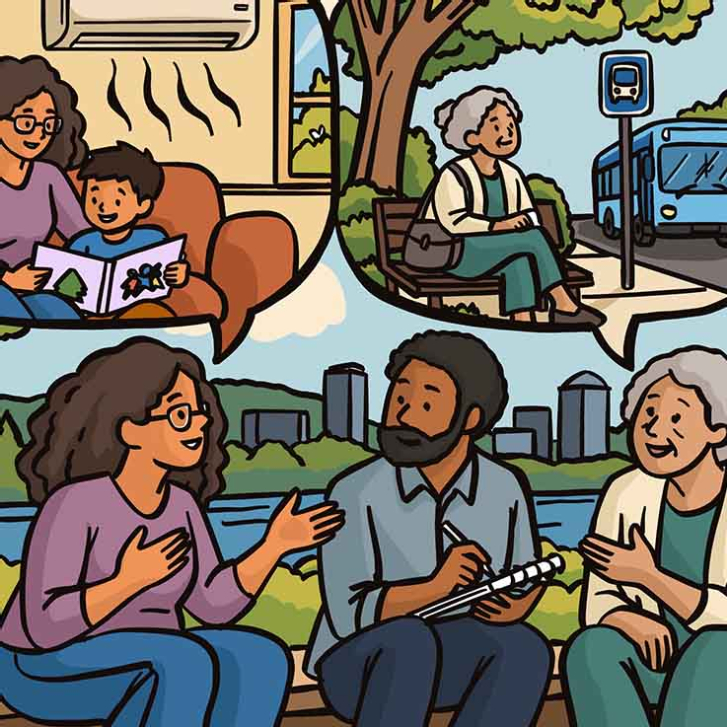
Portland residents explained what makes a building livable in a heat wave. Their responses became the basis for statewide climate policy.
Artificial intelligence is a top-of-mind topic not just for leaders in philanthropy and the nonprofit sectors, but across all of society. As nonprofit and social impact organizations explore how AI tools might help them further their mission, many are wondering: What are the risks? Can the field scale up AI adoption without creating deeper societal inequities? In this episode, Barbara Wheeler-Bride talks with Jacqueline Watts of the Patrick J. McGovern Foundation about how the foundation funds AI for social good. The conversation includes takeaways for donors, funders, nonprofit leaders and their teams who are grappling with questions about how or whether to use artificial intelligence. Giving With Impact is developed with the support of DAFgiving360®

What if—rather than focusing on funding "what works"—philanthropy asked what people and societies need to live well and flourish, and built the resources to match?
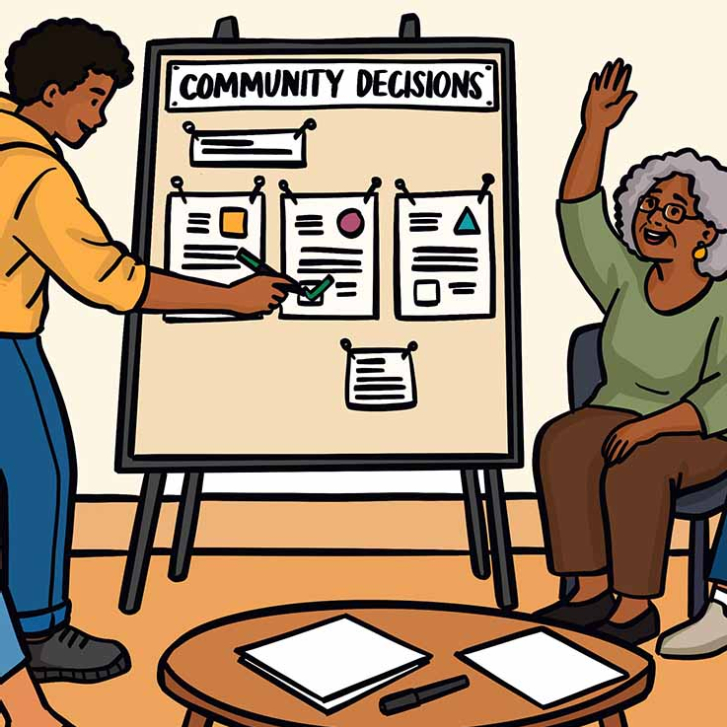
Organizations that put authentic community governance at the heart of their work are using civic data to drive better decisions, generate more durable trust, and produce positive social change.
Donors have the motivation and the means to give, so what’s slowing them down? Host Barbara-Wheeler Bride interviews two donor advisors about some of the roadblocks and friction philanthropic donors face when it comes to giving. First, a check-in with Mary Jovanovich, senior manager and charitable consultant at DAFgiving360®, about what she’s hearing from families and individuals. Then, a conversation with Ben Klasky, founder of Seismic Philanthropy, about “option paralysis,” why he thinks donor-advised funds may be getting a bad rap, and what nonprofits can do to better engage with donors. Giving With Impact is developed with the support of DAFgiving360®


Funders are calling for more program evaluation, but nonprofits are often collecting dubious data, at great cost to themselves and ultimately to the people they serve.

Large-scale social change requires broad cross-sector coordination, not the isolated intervention of individual organizations.
For NGOs, impact comes in different forms and to track the cycles of social change work, we must think across the tangibility and the speed of emergence of change.

With an understanding of these 10 funding models, nonprofit leaders can use the for-profit world's valuable practice of engaging in succinct and clear conversations about long-term financial strategy.

Social entrepreneurship is attracting growing amounts of talent, money, and attention, but along with its increasing popularity has come less certainty about what exactly a social entrepreneur is and does.