



Social Enterprise
The Societal Role of Social Entrepreneurship
How can social entrepreneurship promote social justice? An unlikely source provides an unambiguous and practical framework.
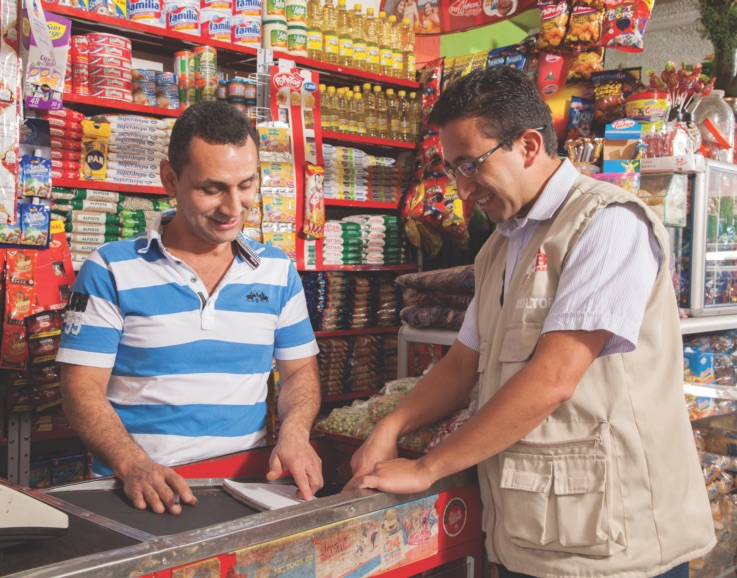
Forty years ago, FUNDES launched to serve small enterprises in Latin America. The organization had to reinvent itself many times to survive but continues to support the region’s economic and social development. | Open access to this article made possible by the University of Geneva
How can social entrepreneurship promote social justice? An unlikely source provides an unambiguous and practical framework.

Research demonstrates that social enterprises are political actors that seek to influence public policy and sociocultural norms.

Like physicians before the discovery of the interstitium, social sector leaders have misunderstood the fundamental nature of civil society and how it thrives. We must build new tools to understand it better.
Laurie Lane-Zucker's The Impact Entrepreneur Breakthrough provides a manual for coining the new words and narratives we need to make durable change.

Funders and founders need a better taxonomy for segmenting the impact market.

Can we say yes to different visions for resolving the housing crisis in Ned Resnikoff's Build or Die and in Samuel Stein's A Right to Housing?

Housing in America is a complex social issue. It intersects with poverty, education, public health, climate resilience, racial equity, and more. Funders who work in each of these areas struggle to address housing and homelessness on their own, but together, they may be able to impact the wider systemic issue of housing justice. The Fund for Housing and Opportunity is a collaborative fund designed to do just that through grants that support housing policy, advocacy, and organizing work.
In this episode, we talk with Jeanne Fekade-Sellassie, FHO’s executive director, about how the fund’s work is catalytic, how collaborative funds enable funders to take risks, and how listening to and learning from grantee partners, experts, and fellow funders creates a stronger collaborative approach to solving the housing crisis. Giving With Impact is developed with the support of DAFgiving360®


Funders are calling for more program evaluation, but nonprofits are often collecting dubious data, at great cost to themselves and ultimately to the people they serve.

Large-scale social change requires broad cross-sector coordination, not the isolated intervention of individual organizations.

For NGOs, impact comes in different forms and to track the cycles of social change work, we must think across the tangibility and the speed of emergence of change.

With an understanding of these 10 funding models, nonprofit leaders can use the for-profit world's valuable practice of engaging in succinct and clear conversations about long-term financial strategy.

Social entrepreneurship is attracting growing amounts of talent, money, and attention, but along with its increasing popularity has come less certainty about what exactly a social entrepreneur is and does.