
Collaboration
Open Social Innovation
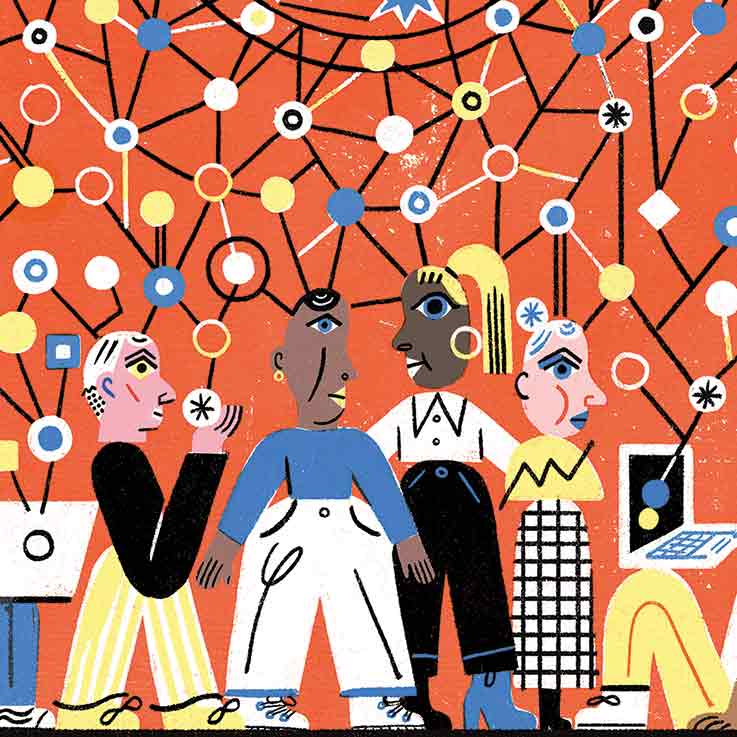
A new approach to tackling social problems orchestrates the participation of multiple stakeholders in the process from generating ideas to scaling solutions.
Organizations are increasingly turning to system change to tackle big social problems. But systems are complex, and mastering the process requires observation, patience, and reflection. To begin, here are two
approaches to pursuing system change.
A project undertaken by Indian NGO Gram Vikas shows how efforts to solve a particular social problem can have a far reaching impact on an entire social system.
How organizations in the development sector can more systematically consider the implications of the environments in which they work.
Social enterprises contribute significantly to the economy, and simultaneously are fiercely social mission-driven.
Organizations often stumble when it comes to turning innovation into impact. Here’s a guide to diagnosing and preventing several “pathologies” that underlie this failure.
Are research and practice two coins or two sides of the same coin?
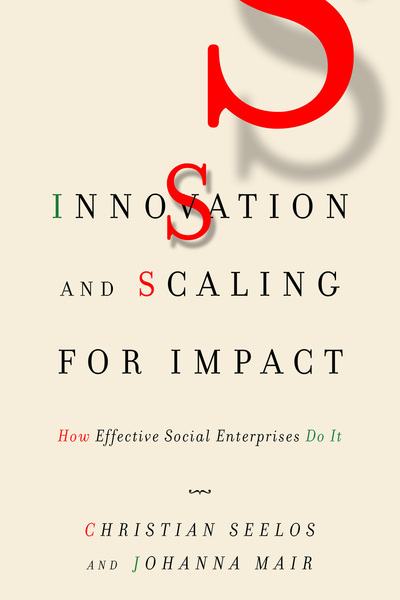
Organizations need the ability to both scale up successful innovations and create new ones, even those that challenge the status quo.
Stanford Social Innovation Review celebrates a decade of innovative ideas and practices.
It is time to move from innovation as an ideology to innovation as a process.
Videos from the Social Innovation Dialogues convening in Berlin.
Elizabeth Littlefield heads up OPIC, a federal agency that helps steer billions of dollars of private investment capital to developing countries.
It is time to shift gears and to stop searching for best practice models on leadership within the Fortune 500 companies.
We must invest in the financial literacy of social entrepreneurs and in the social literacy of investors.
A group of social innovation leaders from around the world discuss impact investing and how to make it more effective.
Chris West leverages the assets of the Shell Foundation and its corporate parent to improve the lives of low-income people in the developing world.
Richard Jefferson believes that biotechnology can be used to benefit the poor and disenfranchised, but only if the R&D process is democratized.