


Heroic Accounting
New proposals for monetizing corporate planetary impacts are alluring, impossible, and perilous.

New proposals for monetizing corporate planetary impacts are alluring, impossible, and perilous.
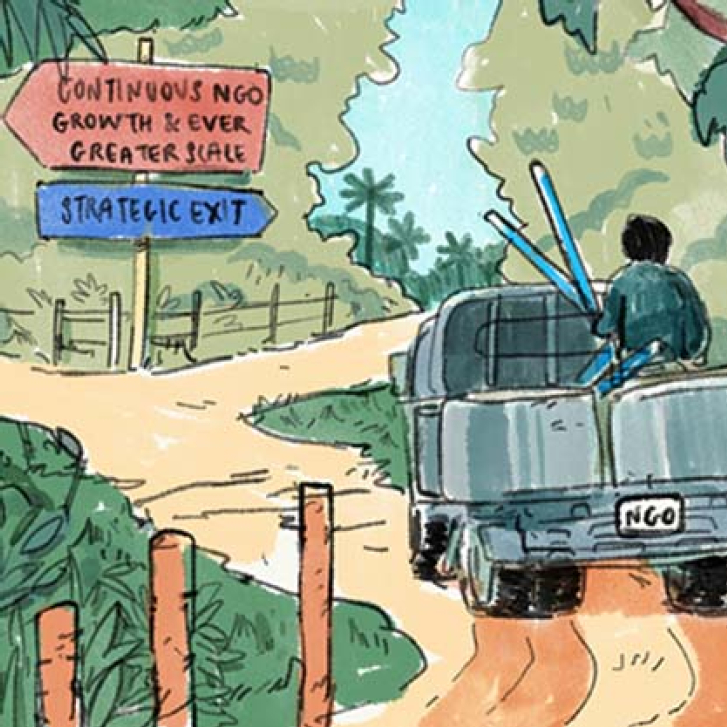
It might be a cliché, but it’s rare for international NGOs to “work themselves out of a job.” Doing so requires planning from the start, communicating clearly, setting hard deadlines, and going unconditionally.

A look at how nonprofits and nonprofit workers in the United States changed during the COVID-19 pandemic—and how to navigate the new changes ahead.
Trust-based philanthropy is becoming an increasingly well-defined approach for addressing the power imbalance in the nonprofit sector and closing the gap between funders and grantees. How does a trust-based approach to giving compare to a strategic one? To help us explore the characteristics of both, SSIR publisher Michael Voss speaks with Julia Reed of Schwab Charitable, Philip Li of the Robert Sterling Clark Foundation, and Nadia Roumani, cofounder of the Effective Philanthropy Learning Initiative at PACS. A sponsored podcast developed with the support of DAFgiving360.
An excerpt from Mutualism on building economic power for the mutualist ecosystem.


Funders are calling for more program evaluation, but nonprofits are often collecting dubious data, at great cost to themselves and ultimately to the people they serve.

Large-scale social change requires broad cross-sector coordination, not the isolated intervention of individual organizations.

For NGOs, impact comes in different forms and to track the cycles of social change work, we must think across the tangibility and the speed of emergence of change.

With an understanding of these 10 funding models, nonprofit leaders can use the for-profit world's valuable practice of engaging in succinct and clear conversations about long-term financial strategy.

Professionalism has become coded language for white favoritism in workplace practices that more often than not leave behind people of color. This is the fourth of 10 articles in a special series about diversity, equity, and inclusion.