


How Philanthropy Can Help Lead on Data Justice
By embracing community-based participatory research and other equity approaches to data, philanthropy can change the game, revitalize research and communities, and realize greater impact.

By embracing community-based participatory research and other equity approaches to data, philanthropy can change the game, revitalize research and communities, and realize greater impact.
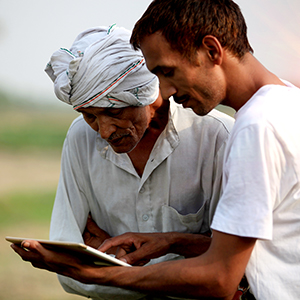
Unregistered births and deaths and other failures to officially document people's lives have compromised public policy around the world. Governments, nonprofits, public health groups, and other organizations that play a critical role in civil registration and vital statistics can start improving their efforts with these six insights.
As traditional sources of charity shrink and donors increasingly look for more impact from their gifts, venture capital's role in philanthropy has expanded. To explore the trends and what they mean for giving, SSIR's publisher Michael Voss speaks with Jim Bildner, CEO of Draper Richards Kaplan Foundation, and Julia Reed, managing director of relationship management with Schwab Charitable. A sponsored podcast developed with the support of DAFgiving360.

How do stories work to expand and accelerate impact? A roundtable discussion between four storytellers and leaders of change on narrative's power to reach and inspire new audiences.

A conversation about the Tax Cuts and Jobs Act, US economic performance, and people's charitable giving with Una Osili, associate dean for research and international programs at the Indiana University Lilly Family School of Philanthropy; Hayden Adams, director of tax and financial planning at the Schwab Center for Financial Research; and Michael Voss, publisher of SSIR. A sponsored podcast developed with the support of DAFgiving360.


Funders are calling for more program evaluation, but nonprofits are often collecting dubious data, at great cost to themselves and ultimately to the people they serve.

Large-scale social change requires broad cross-sector coordination, not the isolated intervention of individual organizations.

For NGOs, impact comes in different forms and to track the cycles of social change work, we must think across the tangibility and the speed of emergence of change.

With an understanding of these 10 funding models, nonprofit leaders can use the for-profit world's valuable practice of engaging in succinct and clear conversations about long-term financial strategy.

Professionalism has become coded language for white favoritism in workplace practices that more often than not leave behind people of color. This is the fourth of 10 articles in a special series about diversity, equity, and inclusion.