


Collaboration
Collective Impact 2.0
Authors of a seminal article on collective impact explore what it means to put equity at the center of the practice and how that changes the collective impact process itself.

Authors of a seminal article on collective impact explore what it means to put equity at the center of the practice and how that changes the collective impact process itself.

In order to foster true collaboration in the social sector, there must be a real exchange of resources between organizations.

The pandemic’s disruptions have only exacerbated many social, economic, and cultural fault lines, and so, learning recovery programs must focus on quality and equity at both the individual and systems level.

Optimizing the path from funder to fundee isn’t something philanthropy has thought about systematically, but the sector should take this moment to build some muscle into it, with an eye toward racial and economic justice.

Trust-based philanthropy is becoming an increasingly well-defined approach for addressing the power imbalance in the nonprofit sector and closing the gap between funders and grantees. How does a trust-based approach to giving compare to a strategic one? To help us explore the characteristics of both, SSIR publisher Michael Voss speaks with Julia Reed of Schwab Charitable, Philip Li of the Robert Sterling Clark Foundation, and Nadia Roumani, cofounder of the Effective Philanthropy Learning Initiative at PACS. A sponsored podcast developed with the support of DAFgiving360.

To advance equitable social-emotional learning, schools would benefit from increased collaboration with out-of-school program providers.

Listening to participants allows nonprofits to go beyond the “what” of change to the “how and why,” the first step toward changing unjust systems.
An excerpt from Leading for Justice on going beyond compliance and compensation in HR.

Last spring, as the COVID-19 pandemic magnified the United States’ racial and class inequities, Teach for America endeavored to put philanthropic power in younger, more racially diverse hands.
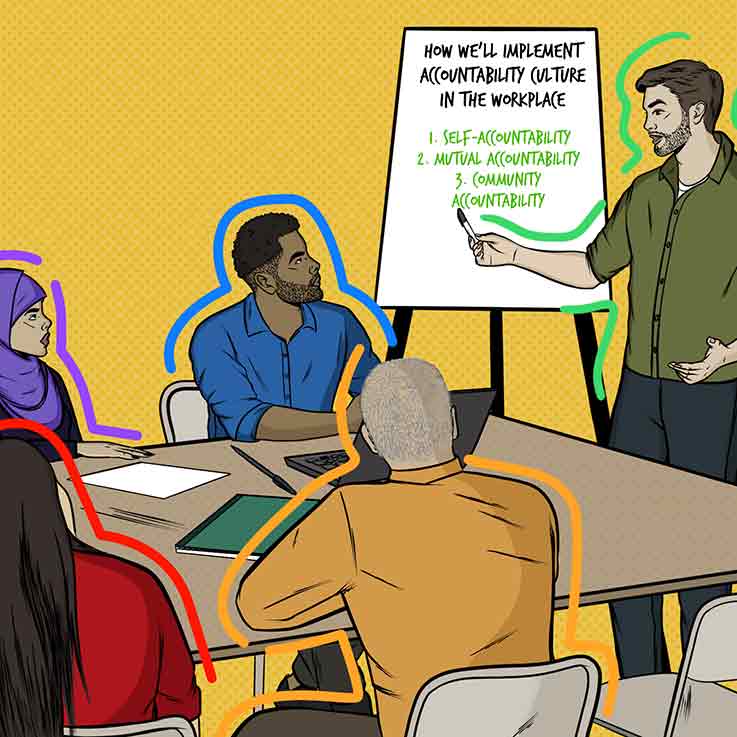
Advancing racial equity within your organization requires making accountability a cultural norm.