


How NGOs Can Act as Learning Labs for Government
As global aid declines, new learning partnership models between NGOs and government will play a critical role in scaling and sustaining health reform in low- and middle-income countries.

As global aid declines, new learning partnership models between NGOs and government will play a critical role in scaling and sustaining health reform in low- and middle-income countries.

A nationwide educational program in Mexico that dispatched mentors to schools succeeded by sparking greater parental involvement.
AI technologies are reshaping society. SSIR brought together 20+ leaders to explore the intersections of AI with civil society, ethics, governance, the public sector, and more.

The nonprofit sector and its philanthropic supporters still too often overlook the most effective pathway to exponential impact.

What we've learned about optimizing "big bet" philanthropy.


Since 1970, more than 200,000 nonprofits have opened in the U.S., but only 144 have reached $50 million in annual revenue. They got big by doing two things: They raised the bulk of their money from a single type of funder. And just as importantly, these nonprofits created professional organizations that were tailored to the needs of their primary funding sources.
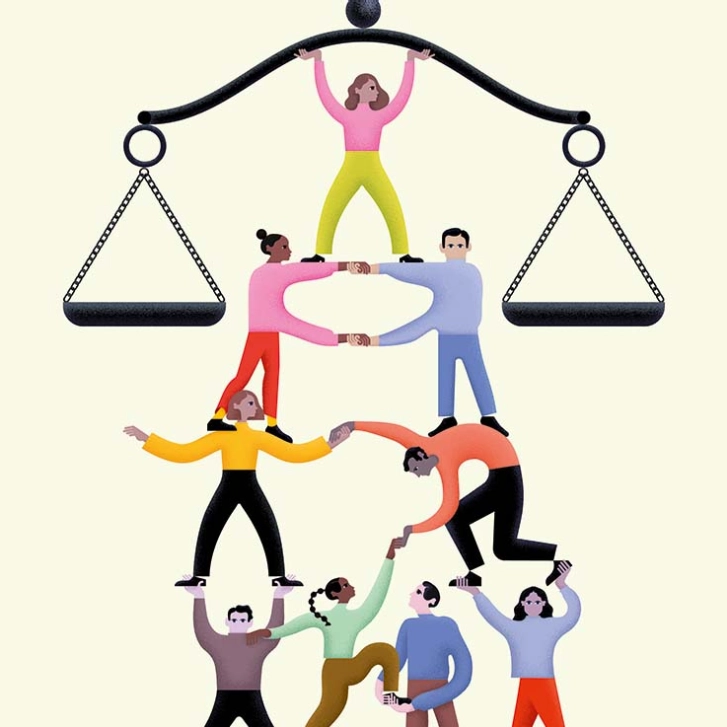
A decade of applying the collective impact approach to address social problems has taught us that equity is central to the work.

How do innovations move from the edges to the core of what an organization does? For maximum impact, innovations must cease to be innovative and become institutionalized and normalized.

Impact evaluations are an important tool for learning about effective solutions to social problems, but they are a good investment only in the right circumstances.

Scaling requires not only fidelity to core processes and programs, but also constant adjustments to local needs and resources.