The Peace Laboratory
After Colombia's civil war, the government reinstituted state authority in remote jungle regions by working with community leaders to satisfy local needs.
For many social initiatives, achieving transformative impact requires government leadership. Teaching at the Right Level (TaRL) Africa has gained important insights about effectively supporting government partners, adapting operations across contexts and borders, and working within existing systems.
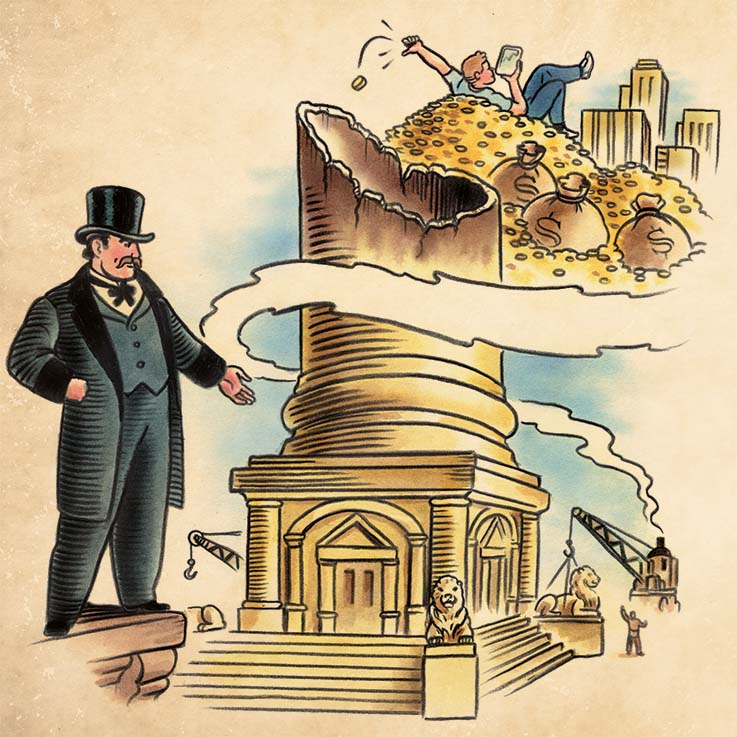
To create the world we want, we must build a wealth management system rooted in belonging for all.
To build a future where government truly works for people, human services leaders must cocreate a shared vision that moves beyond incremental change to reimagine outcomes, equity, and data infrastructure at scale.
Data can guide investment priorities in strengthening global democracy.
St. Paul sits at the heart of a growing national movement—one that insists our systems serve people, not the other way around. This movement challenges us to rethink how government operates and calls us to lead with a new kind of courage.
What we ask of our institutions, systems, and governing structures—to love all—we must also ask of ourselves.
Ukrainian civil society did not have the luxury of awaiting the end of war to make the country more resilient and sustainable. The Alliance of Ukrainian Universities took the lead in coordinating an effective response. | Open access to this article made possible by the Akira Yamaguchi Endowment for Environmental Health and Human Habitation at the Harvard T.H. Chan School of Public Health
Our work in the Transformational Change Partnership demonstrates how investing in public officials can generate system-level improvements.
These times require funders to act with urgency and devotion to ensure justice and equity for all.