


 (Photo by iStock/FG Trade Latin)
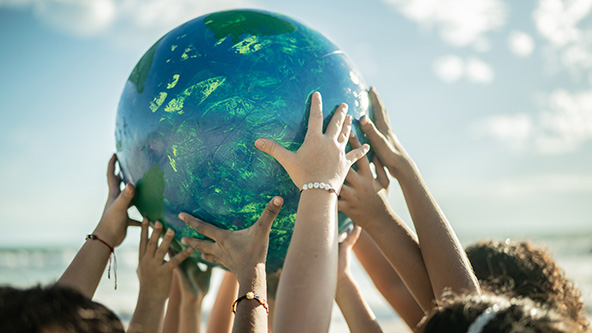
Our volatile sociopolitical and ecological collapses are symptoms of a deeper fracture: The internalized colonial belief that humans are separate from and superior to the rest of nature. Colonialism has imposed an illusory sense of separation, fracturing our identity and fostering deep insecurity that we long to heal. Instead of working toward repair, most of us try to placate the pain of separability by commodifying, consuming, and accumulating nearly everything: stuff, relationships, knowledge, status, and solutions.
Practices for Transitions in a Time Between Worlds
There is no manual for living through our wildly unpredictable times. How do we imagine, prepare for, and shape an unknown future? Who do we need to be or become? Instead of a road map, we offer this supplement to illuminate inquiries, capacities, and practices that we believe can open consequential new pathways to a better tomorrow. Sponsored by Joseph Rowntree Foundation
-
These Times Ask More of Us
-
The Work of Hospicing
-
Stewarding Loss
-
The Decelerator
-
Grief Tending
-
Prefiguring a Future We Want
-
A Creatrix Praxis Space for Liberation
-
Collective Imagination
-
An Infrastructure of Care for the Oracular
-
Awakening Complexity Consciousness
-
Server Farm
-
Sites of Practice
-
Reactivating Exiled Capacities
-
Rewiring the Great Wealth Transfer
-
A Regenerative Economy in Action
-
Tackling the Wealth Defense Industry
-
Secret Guides and Weird Waymarkers
As Chief Ninawa Huni Kuin says: “Since our imagination has become colonized, the possibility of healthier futures depends less on our capacity to imagine them than on our capacity to repair our fractured relationships with the Earth, other species, among ourselves, and within ourselves in the present.”
As our global collapse intensifies, we will more than ever need relational capacities to show up with sobriety, maturity, discernment, and responsibility, or we risk exacerbating the same problems we seek to solve. We will continue to justify genocidal and ecocidal projects as collateral damage while maintaining our delusional desires. Reactivating our relational capacities proves immensely challenging because colonial modernity has rewired our neurophysiology into narrow, transactional ways of sense-making, keeping us addicted to comfort and security that is subsidized by systemic violence while we languish in a chronic state of denial of our own complicity in harm. We are referring to a range of relational sensibilities that have been exiled from our individual, collective, and metaphysical nervous systems because they threaten the modern/colonial political project built on the illusion of separability.
So we sit with a question: If colonialism has severely limited how we desire, heal, and hope, how can we reactivate our capacity to imagine beyond separation? How can we relearn to tether our sense of belonging to the land, rather than to human constructs of identity and worth?
A group of 12 artists is researching how artistic and somatic practices can interrupt modern colonial psychoaffective loops embedded in our neurophysiology and reactivate relational sensibilities as individuals and as a collective. Titled “Reactivating Exiled Capacities,” the project operates through the University of the Forest under its Global Strategy of Critically Engaged and Complexity-Grounded Climate Education. The cohort of artists includes musicians, clowns, death doulas, poets, directors, actors, choreographers, and performance artists.
Examples of the group’s inquiry include experimenting with rhythm, movement, and diffraction technologies that can reactivate our capacity to be honest and present with complexity: the achingly beautiful, the broken, and the messed up—within and around us. These practices help us interrupt our desires to escape what is difficult, painful, or disgusting, and our attachment to idealized, more comfortable versions of reality and ourselves. Our creative practices draw on humor, hyper self-reflexivity, and humility to strengthen our capacity to act in service to a wider planetary metabolism, while divesting from our desire to be acknowledged for that service. We aim to interrupt narcissistic delusions about our own self-importance and perceived entitlement.
The artistic invitations developed by this research group, alongside the lessons we have learned, inform the design of new “capacity programs” in the hope that they humbly contribute to more responsible political practices of healing and well-being in the fields of decolonization, social innovation, and activism.
Read more stories by Azul Carolina Duque.