


 (Illustration by Vicki Turner)
The eyes of the future are looking back at us and they are praying for us to see beyond our own time. They are kneeling with hands clasped that we might act with restraint, that we might leave room for the life that is destined to come.—Terry Tempest Williams
We begin with poetry. In these fragmented times, the poetic can invite an expansion of perspective that allows for something of our deeper and shared humanity to enter the conversation. Poetry, like parable or song, can cut through modernity’s incessant clamor. It can gather us to a place where we might sense another way to approach our collective challenges. Visionary author Octavia Butler reminds us in Parable of the Sower that “The world is full of painful stories. Sometimes it seems as though there aren’t any other kind and yet I found myself thinking how beautiful that glint of water is through the trees.” To be a changemaker is to be enmeshed in or moved by painful stories. But our experience supporting change leaders has taught us that while careful analysis, systemic approaches, fierce commitments, and the development of new skills and capabilities are all vital, they are not enough. This article is an attempt to step back from the urgent and draw our collective attention to the glint of water through the trees. For as our foundational socio-ecological systems grow increasingly unstable, we need to orient toward new patterns of possibility.
Practices for Transitions in a Time Between Worlds
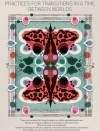
There is no manual for living through our wildly unpredictable times. How do we imagine, prepare for, and shape an unknown future? Who do we need to be or become? Instead of a road map, we offer this supplement to illuminate inquiries, capacities, and practices that we believe can open consequential new pathways to a better tomorrow. Sponsored by Joseph Rowntree Foundation
-
These Times Ask More of Us
-
The Work of Hospicing
-
Stewarding Loss
-
The Decelerator
-
Grief Tending
-
Prefiguring a Future We Want
-
A Creatrix Praxis Space for Liberation
-
Collective Imagination
-
An Infrastructure of Care for the Oracular
-
Awakening Complexity Consciousness
-
Server Farm
-
Sites of Practice
-
Reactivating Exiled Capacities
-
Rewiring the Great Wealth Transfer
-
A Regenerative Economy in Action
-
Tackling the Wealth Defense Industry
-
Secret Guides and Weird Waymarkers
Humans have extraordinary capabilities. Our capacity for dreaming and deductive reasoning, flair for collaboration, facility with language and storytelling, tools and technologies, and cunning and curiosity have enabled us to become the preeminent species on the planet. But it appears that we have never been less certain about what it is that makes us truly human and why we are really here. From our perspective, many of the most alarming phenomena unfolding around us—resurgent racial supremacists, belligerent nationalism, religious extremism, entrenched culture wars, creeping authoritarianism, and potentially catastrophic ecological recklessness—are, at their core, crises of relationality. Relationality, according to researchers Wing Shan Kan and Raul Lejano, is “the condition by which individuals (or groups) think and act in coherence with the web of relationships in which they are a part.”1 Through webs of influence and impact, we are “related” to everyone and everything on the planet. Any notion that we are not is an illusion that cannot be sustained if we are to live and flourish together. We’d also expand this definition to include our intimacy (or lack thereof), with our own interiority—which includes the stories we hold about ourselves and the world. But as the relational fields that sustain authentic community, connection and meaning grow increasingly fragmented, many people find themselves adrift and vulnerable to the woefully limited narratives and maimed myths competing for their attention.
The perspective shift that will allow us to experience greater relationality at scale represents a kind of species-level adaptive challenge. An adaptive challenge is a form of systems pressure, often in the form of a new threat, that renders our previously successful strategies ineffective and even counterproductive. Overcoming it requires learning and the development of new capabilities.2 We suggest that supporting such learning represents the most important work of the coming century. Our other efforts—technological and social innovations, political and economic reforms, resistance movements, repair work and regenerative practices—all rest on this foundation. Educating for specific developmental outcomes is important,3 but the opportunity, as we see it, goes beyond individual development. Our work at the Wolf Willow Institute has taught us that any new skill, technology, or capability invariably gets mobilized in service of our existing paradigms and states of consciousness, both individual and collective. We are dedicated to supporting leaders and systems shapers to come to know and inhabit the world from a foundational awareness that we’re calling complexity consciousness.
A Way of Being
Complexity consciousness describes a particular quality of being that is both poetic and prosaic. It reminds us of our shared humanity and provides insight into what this time is asking us to become. It points to the integration of our multiple ways of knowing, being, and relating—in which the rigors of science and rationality find common ground with the wisdom of the heart and a sense of the sacred.4 Complexity consciousness describes an integral perspective that weaves the gifts of premodernity, postmodernity, and the ever-emerging now.5 We think of it as the critical “internal” correlate that must temper our dazzling “external” powers and world-shaping technologies. Amid the current metacrisis, it gestures to the glint of water through the trees—the urgency and possibility of restoring a sense of reverence and care for the Earth, recognizing that humans are part of a larger community of life, and taking responsibility for the well-being of one another, the planet, and future generations. It might be tempting to dismiss this as mystical, impractical, or even self-indulgent in the face of the metacrisis, but we’d like to emphasize that this way of relating to the world is as practical as it is poetic. We will endeavor to be clear about what we mean.
Consciousness encompasses not only what we know but also how we know, together with who and what we experience ourselves to be. Shaped by our cognition and the ways we are entangled with the world, we might say that our every action is in some way an expression of our state of consciousness. It is the internal condition or storyline that affects the quality of our participation and defines the limits of our world.
Complexity can be understood as a property of any living system or network where multiple elements interact with one another. Those interactions lead to emergent and unpredictable behaviors that cannot be easily understood by analyzing the elements in isolation. The modern world still tends to perceive reality as a substance rather than as a web of relationships, and the language of complexity is one way to describe the relational nature of reality with more precision and accuracy.
Complexity consciousness is not simply a metaphor. A growing body of research explores the nature and quality of consciousness as it relates to neural complexity6 while developmental psychologists suggest that later stages of adult development represent an increase in interior complexity and a corresponding capacity to perceive, think, act, and imagine in more complex ways.7 We find these perspectives valuable, but suggest that complexity consciousness has an additional, more primal quality. It is a state where we directly experience a sense of kinship and connection with the worlds beyond ourselves, a state where we no longer experience ourselves as being separate. From this place, responsibility and reciprocity are not simply moral imperatives or rational choices; they are central operating principles, grounded in the intrinsic value of life on Earth, providing the bedrock for viable ecosystems and sustainable patterns of living. Complexity consciousness is not simply a way of knowing about complexity. Rather, it is a way of being that flows from a greater sense of connectedness.
Complexity consciousness describes a particular quality of being. It reminds us of our shared humanity and provides insight into what this time is asking us to become.
The spirit of complexity consciousness reflects Indigenous ontologies such as Melanie Goodchild’s relational systems thinking,8 Gregory Cajete’s original face,9 and Tyson Yunkaporta’s five minds.10 It echoes Jean Gebser’s concept of integral mind11 and Kathia Laszlo’s idea of systems being.12 Complexity consciousness describes the foundational awareness that Neil Theise identifies in various contemplative traditions including Buddhism, Kabbalah, Vedanta, and Kashmiri Shaivism.13 But however we understand it, the awakening of complexity consciousness represents perspectival expansion and thus a fresh storyline. It is a paradigm shift in the way we see and relate to ourselves, one another, and the more-than-human world.14 From it flow the following:
• A long-term perspective: a sense of consideration for and responsibility to future generations;
• A relational perspective: a capacity for empathy and relational intimacy with all life together with a felt-sense of membership in a single human family and the wider Earth community;
• An ecological or systemic perspective: an understanding and reverence for the interconnectedness and interdependence of all life; and
• A principled perspective: an ethic of self-restraint and right relationship alongside a deep commitment to the flourishing and well-being of others.
Complexity consciousness, then, does not simply refer to leadership development or a sophisticated understanding of systems. Rather, it is an orientation that enables us to participate in and influence the world from a posture of greater relationality. Fundamentally, it is about awareness and connection, expressed and experienced as a kind of love. Like Humberto Maturana Romesin, Gerda Verden-Zöller, and Andreas Weber, we are using the term “love” ecologically to describe the act of relating to others as legitimate beings with whom we coexist while allowing them to be authentically themselves without the need to control, erase, or change.15 Such acceptance as the basis of social interactions and cooperation is essential for our evolution and long-term thriving.
Ways of Relating
It should go without saying, but complexity consciousness isn’t something you can go out and “get” any more than you can simply get the attributes through which it is expressed: qualities such as wisdom, humility, compassion, curiosity, courage, self-awareness, authenticity, and selflessness. It invariably requires unlearning or even sacrifice. Our existing attachments, identities, successes, certainties, and need for control often stand in the way of our development. For, as Christopher Wallis observes, awakening does not entail knowing or having something that others do not but rather “losing something—specifically, your deeply conditioned beliefs about who you are and what the world is.”16 According to Wallis such conditioned beliefs include our socially constructed self, our unconscious mental models through which we perceive reality, and our sense of separation from the world and others. A similar idea is found in the three openings that Otto Scharmer and Katrin Kaufer suggest are required for relational systems transformation that require “letting go of what wants to die in oneself and letting come what is waiting to be born.”17
There is something mysterious and rather beautiful about this kind of awakening. To let go is not only to see reality more clearly but also to open up to a more expansive worldview. Letting go is not easy, given that we often hold tightly to the way things are. But every culture retains wise practices that are precisely designed to help us enter some form of transformative learning crucible in which we are supported as we open ourselves to emergence, to perspectival expansion, and to the mysteries of the human and more-than-human worlds. The heart of our work at Wolf Willow involves learning to build contemporary versions of such crucibles and supporting the leaders called to enter them. When we do, we begin to disidentify with and even “die” to our familiar ways of being in the world. We awaken from the partiality of our old stories, we awaken to new and more complete ones, and we begin to reconfigure our relationships in three critical domains:
Relationship to self | Each one of us, by nature of being human, carries particular sensibilities, capabilities, or gifts that are as much ecological as they are social. We might say that the central task of our lives is to find and nurture those gifts and then to give them away, thereby influencing and shaping the web of relationships around us. Discovering such gifts invites a journey to source: our original nature, psyche, or soul. It’s the deeper truth or greater Self that lies beneath the identity with which we primarily identify. In journeying to it, we encounter what the poet David Whyte calls “your own truth at the center of the image you were born with.”18 In doing so, we ourselves find our true center and become centered in the world. This is the heart of inner work for change.
Relationship to others | Our state of consciousness—complex or otherwise—is expressed through our relationships: Each shapes the other in a continuous dance between the inner and outer domains of human experience. Recent years have seen a welcome focus on inner work but it would be a dangerous illusion to imagine that inner work alone will lead to a shift in the paradigms, power structures, injustices, displaced costs, unsustainable practices, boundary conditions, resource flows, and relational dynamics that underpin modernity’s flaws. Awakening complexity consciousness is not something we do in isolation. Above all it is a relational practice. For many of the leaders we work with, this involves “re-culturing” human systems as they work across levels to not only address urgent challenges but to shift how such challenges are addressed. Both are critical.
Relationship to the more-than-human world | The systems scholar Peter Senge suggests that our capacity to understand and influence larger fields for change is enhanced through “direct contact with the generative capacities of nature.”19 We agree; as human beings we have always come to know ourselves and our roles in relationship with the natural world. Cultivating complexity consciousness is a recollective practice that can result in ecological awakening—a direct experience of not only the world’s beauty, sentience, and animacy but a felt sense of kinship and belonging. Such awakening catalyzes a porousness between the self and the wider world that allows for more complex perspectives, softens or challenges anthropocentrism, and increases empathy across species. It provides insight into our own unique way of being and belonging to the world and offers a direct experiential window into the complex relational systems we seek to engage.
From Poetry to Practice
What might this mean in practice for those working to resource and support the emergence of a flourishing future? The world of social investment is evolving rapidly from traditional grantmaking toward increasingly collaborative approaches of systems transformation.20 But it isn’t easy to find and fund the kind of paradigm shift that Donella Meadows famously identified as the deepest leverage point for social and civilizational change.21 We notice several patterns emerging in the work of visionary social investors that invite closer consideration:
1. Let the future find you. A complexity perspective reminds us that things don’t really change; life evolves and adapts through patterns of emergence. Our primary work is not trying to generate and scale “solutions” grown in labs and think tanks but rather looking for the new mindset taking shape in the wild, wherever it is happening and at whatever scale. Where is the future already alive in the system? Sensing, tending, connecting, learning from, and bringing practical support to such living models or patterns of emergence may stretch some of our habits and cherished certainties. It generally requires a new relationship with risk. It invariably stretches not only the boundaries we have drawn around our work but our very capacity to love and trust.
2. Join the dance. Philanthropists tend to fund projects and people that reflect their own ways of knowing, being, and doing. But such ways are largely unconscious and those who deviate from them may be invisible, seem impractical, or appear completely incomprehensible to the well-resourced. This is not to deny the importance of rigorous discernment but social investors seeking to sense the emergent future cannot just support transformative learning for others; they need to engage in it, too. Only those who embody complexity consciousness themselves are likely to be able to notice and nurture the seeds of such consciousness across wider social fields.
3. Take the long view. Changemakers must embrace a paradox: Our resources can often alleviate the symptoms of suffering in the short term, but shifting the dynamics that generate such symptoms may require decades or longer. We all know people who have experienced almost instantaneous worldview shifts but collective worldviews evolve over generations. A complexity perspective invites us to move away from a focus on “problem-solving” and expand the boundaries of time, scale, impact, evaluation, and urgency that shape and constrain our interventions.
4. Invest in learning. Our collective challenges at any scale, from the neighborhood to the planet, require learning and the development of new capabilities if we are to successfully adapt and thrive. The implication is clear: If you are in the change business, then you are primarily in the learning business. We’re not just talking about the critical ways that social investors already uplift education systems through sports teams, early childhood initiatives, scholarships, or research. We’re talking about transformative, whole-person, collective learning and ongoing action inquiry through which the seeds of a more complex consciousness take root. Sustained and strategic investment in learning and long-term development—especially for community partners and others leading change work—remains surprisingly rare.
5. Inhabit the in-between. Patterns of innovation and the seeds of the future tend to emerge at the edges of living systems. All too often they die there. Mainstream and margin alike habitually reinforce the boundaries that appear to define and separate them. But the most skillful change agents seem to inhabit and work from a larger and more complex perspective; they understand and relate to both as part of one interdependent whole and harness the tension between them creatively. They enable critical parts of that larger system to affect one another in ways that enable adaption and even catalyze cultural evolution.22
The Power to Change the Story
We do not pretend to have the answers. But we are certain that deep connectedness offers the only viable foundation for human and planetary flourishing. And we believe that it is possible to intervene effectively and wisely in the swirling currents of cultural adaptation and evolution. The deep connectedness that we’re calling complexity consciousness invites us to inhabit a more generative story—a worldview that promises greater wholeness, intimacy, and skillful participation in times of fragmentation. It points to a possible future where we, as a species, come to know ourselves again as part of the living fabric of the Earth, not just as members of our social, political, or national affiliations. To know we’re not alone. And if we listen, we might catch the very next step, calling out from the dense silence of trees or in the sharp cut of the raven’s wing. How we take that next step and participate in this moment matters. It holds the seeds of a new story.
Read more stories by Laura Blakeman & Julian Norris.