


 (Photo by iStock/Omer Serkan Bakir)
Many civil society organizations struggle under the weight of delayed or uncertain endings, burdened by funding scarcity, human exhaustion, and the stigma of failure. The CEO lies awake at 3 a.m., agonizing over how to cover payroll as funding dries up. The founder wrestles with how to broach the topic of succession with their board. The HR manager worries about attracting talent after multiple failed recruitment rounds and increasing staff turnover. The board chair weighs whether the current legal structure is still the right vehicle for the change their organization seeks.
Practices for Transitions in a Time Between Worlds

There is no manual for living through our wildly unpredictable times. How do we imagine, prepare for, and shape an unknown future? Who do we need to be or become? Instead of a road map, we offer this supplement to illuminate inquiries, capacities, and practices that we believe can open consequential new pathways to a better tomorrow. Sponsored by Joseph Rowntree Foundation
-
These Times Ask More of Us
-
The Work of Hospicing
-
Stewarding Loss
-
The Decelerator
-
Grief Tending
-
Prefiguring a Future We Want
-
A Creatrix Praxis Space for Liberation
-
Collective Imagination
-
An Infrastructure of Care for the Oracular
-
Awakening Complexity Consciousness
-
Server Farm
-
Sites of Practice
-
Reactivating Exiled Capacities
-
Rewiring the Great Wealth Transfer
-
A Regenerative Economy in Action
-
Tackling the Wealth Defense Industry
-
Secret Guides and Weird Waymarkers
These factors can result in endings that decimate morale and undermine legacies, learning, and opportunities for renewal and building strength. Imagine an alternative: thoughtful, well-resourced, and timely endings that honor and celebrate achievements while addressing critical questions such as what can or must be carried forward and what should be left behind.
The Decelerator is on a 10-year mission to transform how UK civil society approaches endings. With seed funding from the Paul Hamlyn Foundation, Pears Foundation, and Esmée Fairbairn Foundation, The Decelerator provides information, tools, and hands-on assistance to facilitate better, more regenerative endings including closures, mergers, CEO transitions, and project completions.
The Hotline
At the heart of this work is The Decelerator Hotline: a confidential, non-judgmental place for organizations anticipating, planning, or delivering an ending. The hotline combines active listening, thoughtful questions, and inspiring stories, and is staffed by Decelerator Navigators, people who have their own experiences with endings.
Following more than 200 conversations, The Decelerator is learning how a single conversation can become a turning point in the life of an organization and a milestone on a prolonged journey. Whenever we pause to consider all the available options, our perceptions and expectations shift in ways that allow us to contribute to a more regenerative civil society.
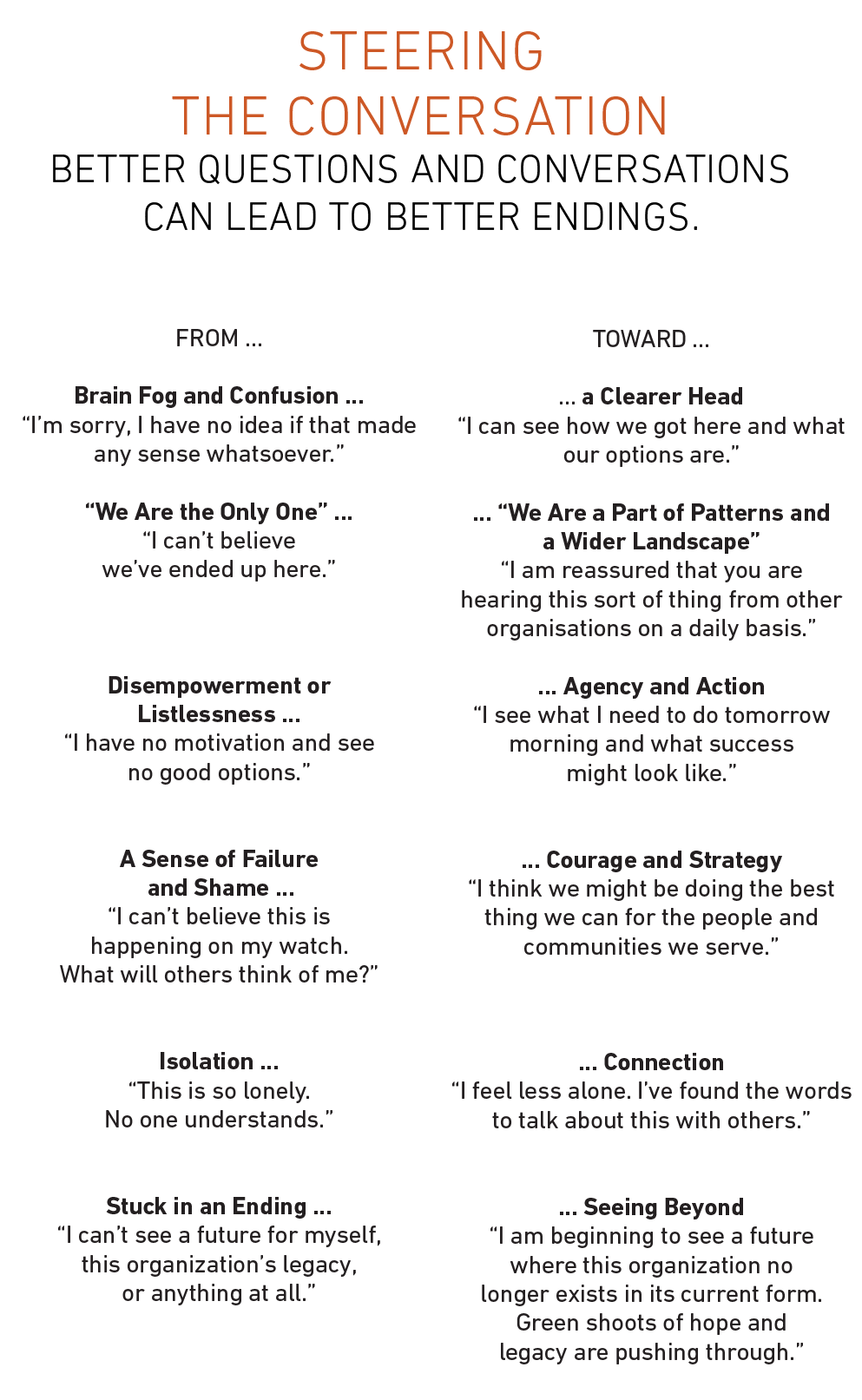
The Decelerator hopes that by making its practices and learnings open-source (see the Substack and decelerator.org.uk), other organizations will be emboldened and inspired to embrace the transformative potential of a good ending.
Endings are inevitable, but bad endings don’t have to be. How do you—or how might you—make space for these conversations and transformations in your own organization, sector, or system?
Read more stories by Iona Lawrence & Louise Armstrong.