
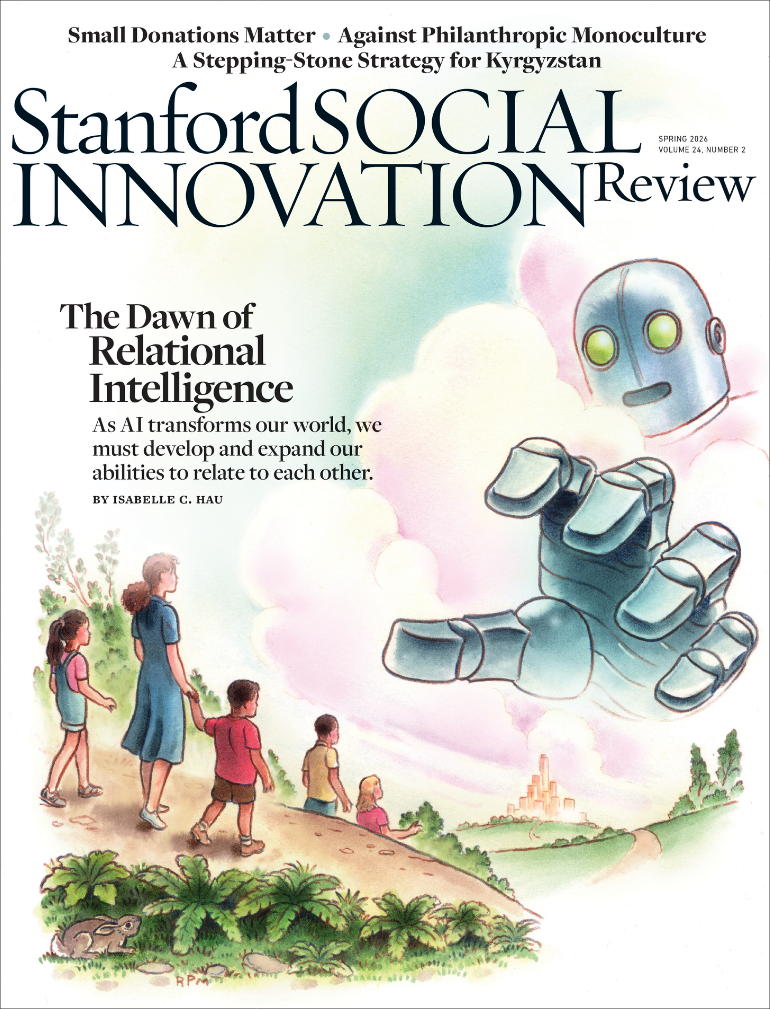

Welcome to the Era of Relational Intelligence
As AI begins to transform education, work, and social life, we need to focus on developing and expanding capacities essential for human flourishing.

As AI begins to transform education, work, and social life, we need to focus on developing and expanding capacities essential for human flourishing.

For four years, small donations have declined across the nonprofit sector, threatening the future of social innovation. But with the right strategies, some organizations are bucking the trend and winning them back.

A year of turbulence has exposed the dangers of philanthropic monocultures and upended assumptions about impact, effectiveness, and scale. Embracing the varied intentions that motivate people to give offers a more resilient, pluralistic path forward.

Young people do turn out for elections—when they are registered. By getting all youth enrolled in high school, we can help achieve universal participation. Here's how to get it done. | Open access to this article for non-subscribers is sponsored by an SSIR supporter.

For many social initiatives, achieving transformative impact requires government leadership. Teaching at the Right Level (TaRL) Africa has gained important insights about effectively supporting government partners, adapting operations across contexts and borders, and working within existing systems.


Funders are calling for more program evaluation, but nonprofits are often collecting dubious data, at great cost to themselves and ultimately to the people they serve.

Large-scale social change requires broad cross-sector coordination, not the isolated intervention of individual organizations.

With an understanding of these 10 funding models, nonprofit leaders can use the for-profit world's valuable practice of engaging in succinct and clear conversations about long-term financial strategy.

Social entrepreneurship is attracting growing amounts of talent, money, and attention, but along with its increasing popularity has come less certainty about what exactly a social entrepreneur is and does.

By working closely with the clients and consumers, design thinking allows high-impact solutions to social problems to bubble up from below rather than being imposed from the top.