Philanthropy & Funding
A New Framework for Foundation Payout
The relationship between impact and time varies issue by issue.
Join Stanford Social Innovation Review and DAFgiving360™ for this complimentary live program! Explore recent data on giving to women’s and girls’ causes and hear from social sector leaders on modern approaches to empower and advance women and girls worldwide. Whether you are a donor, nonprofit leader, advisor, or just curious, this conversation will spark new ways to think about your role in funding the future.
The social sector needs new models for understanding what impact might be possible when the systems we operate in fall apart.
Embedding social innovation across sectors is how we drive more durable systemic change. Even in the most challenging times, here are three ways to do that.
In this FREE SSIR Live! session timed for a global audience, we will host a wide-ranging discussion with experts from Asia, Europe, and North America on the challenges and promises of impact measurement. How can funders ensure that they are investing their money effectively without placing undue burdens on implementers? Which measures should organizations track to ensure deep, sustained, and meaningful uptake? What lessons have evaluators acquired from creating and implementing measurement programs?
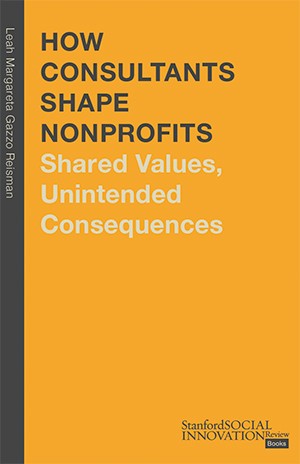
Access this webinarAn excerpt from How Consultants Shape Nonprofits on the history of nonprofit consulting
Funder-owned strategies often reinforce donor-grantee power imbalances and focus on short-term measurable gains, thereby limiting philanthropic impact. Global and systemic challenges can be addressed more effectively with strategies that are collectively owned. | Open-access to this article made possible by Dalberg Catalyst.
When the deck is stacked against change, ambiguous actions can change the game.
The future is having a moment. Philanthropic and nonprofit organizations can use the foresight tools long championed by private industry to build more desirable futures for their communities.
Philanthropists must think beyond funding outcomes and invest in the capacity of systems to perpetuate and sustain change.