


Supporting Children Who Lack Parental Care From All Sides
To effectively support children at risk, the nonprofit and donor community must adopt a holistic approach to child welfare that includes prevention, long-term care, education, and advocacy.

To effectively support children at risk, the nonprofit and donor community must adopt a holistic approach to child welfare that includes prevention, long-term care, education, and advocacy.

Asha Curran, chief innovation officer at the 92nd Street Y and director of its Belfer Center for Innovation & Social Impact, discussed the evolution of the grassroots giving movement at our 2018 Data on Purpose conference.

NovoNutrients uses bacteria to convert CO2 and other industrial emissions into fish food.

AI4ALL’s summer programs for high schoolers aim to increase diversity in the growing field of artificial intelligence.
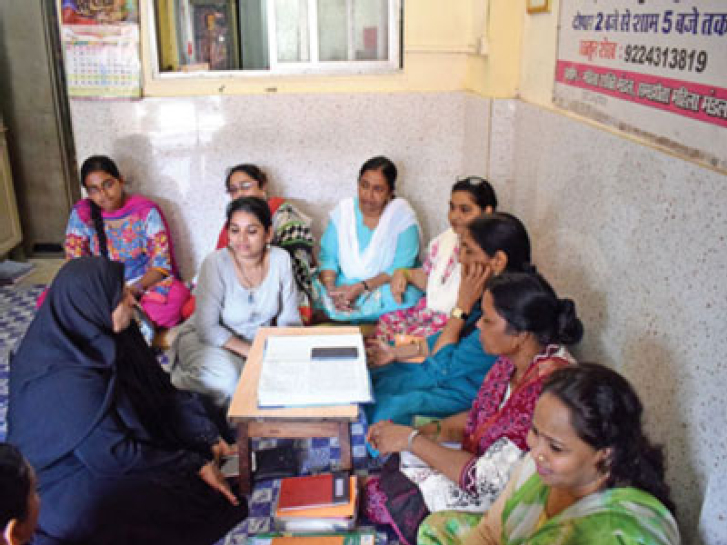
India’s first women clerics are working to challenge entrenched Muslim gender norms.


Large-scale social change requires broad cross-sector coordination, not the isolated intervention of individual organizations.

With an understanding of these 10 funding models, nonprofit leaders can use the for-profit world's valuable practice of engaging in succinct and clear conversations about long-term financial strategy.

Professionalism has become coded language for white favoritism in workplace practices that more often than not leave behind people of color. This is the fourth of 10 articles in a special series about diversity, equity, and inclusion.

By working closely with the clients and consumers, design thinking allows high-impact solutions to social problems to bubble up from below rather than being imposed from the top.

Five principles based in social science that will help organizations connect their work to what people care most about.