Food Solutions
The Coming Famine: The Global Food Crisis and What We Can Do to Avoid It by Julian Cribb
Innovative ways to increase access to food resources and improve food systems (more)

The Coming Famine: The Global Food Crisis and What We Can Do to Avoid It by Julian Cribb
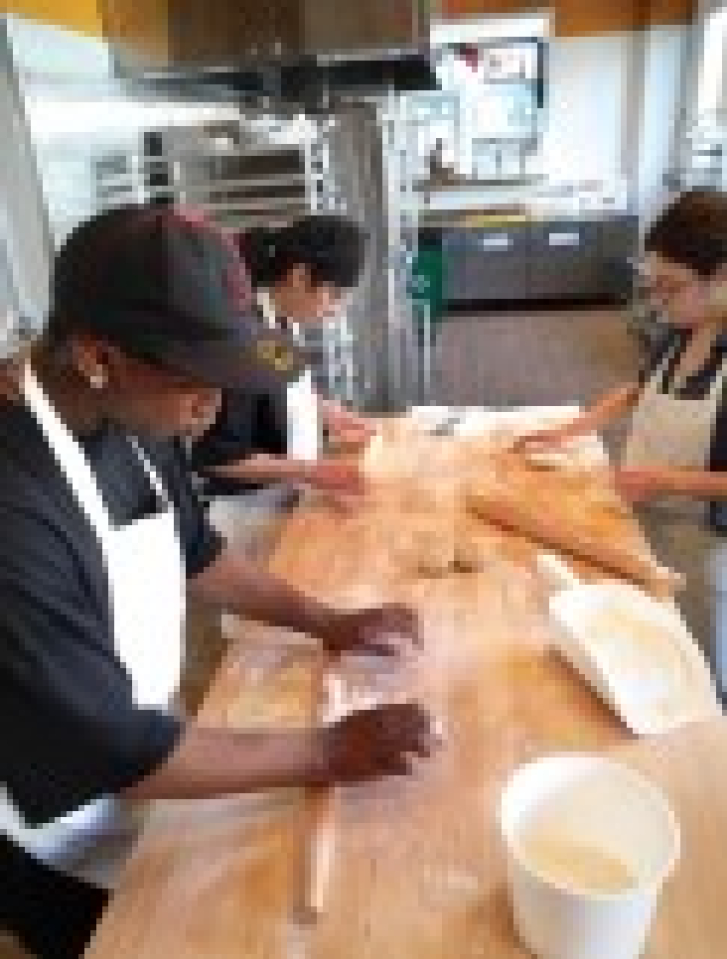
Mission Pie, a for-profit bakery and café, supports local farmers while training at-risk kids.
New public-private partnerships have led to big leaps in the exportation of Argentinian wine.
Global warming may end up helping some poor farmers who will be able to sell their crops for higher prices.
Even if another model isn’t quite right, the idea of model-sharing—teaching and learning lessons from others—can be enlightening.
Studies show that a majority of Americans know they are eating too much and actually wish to lose weight. So why isn’t the industry doing more to address this issue?

Akshaya Patra USA is an innovative social enterprise, a food program that is changing the face of education in India. In this audio interview with Stanford Center for Social Innovation correspondent Sheela Sethuraman, President and CEO Madhu Sridhar talks about how the enterprise grew from a small organization to a massive, well-run entity. She discusses its noble goals and its strategically oriented approaches to meeting high-volume demand at low cost.
Malnutrition is a prime target for social enterprise efforts. In this audio interview with Stanford Center for Social Innovation correspondent Sheela Sethuraman, Dipika Matthias talks about Ultra Rice, a technology developed by PATH in Seattle, which is being introduced to millions of families around the world with great health and productivity benefits. The project director talks about the genesis of the project, its progress so far, and where it is headed.
Social entrepreneurship may be the most promising avenue for solving global problems, says Paul Rice, CEO of TransFair USA. In this audio lecture, sponsored by the Stanford Center for Social Innovation, Rice details his own work to establish Fair Trade. The movement has opened the U.S. market to more than 1.4 million small family farmers around the world who are now getting a fair price for their harvests and making dramatic gains in their living standards.

What are social marketers to do when their target audience couldn’t care less about the change they want to make? Here's how one group got everyday people to care about alternative energy.